











Quora is a global question-and-answer platform where people ask others for answers on anything and everything. Currently, there are around 430+ million monthly active users on Quora. Adam D'Angelo (current CEO) and Charlie Cheever started the journey back in 2009. Both of them used to work at Facebook before this.
Unlike fast-scrolling social networks, Quora focuses on thoughtful, long-form answers where users actively seek reliable information and real-world experience.
In 2026, the platform remains highly relevant for knowledge sharing, personal branding, and content-driven marketing. Professionals, students, researchers, founders, and marketers use it not just to find answers but to influence opinions, drive traffic, and establish credibility in specific niches.
Let’s know the important Quora statistics for 2026, including who uses the platform and how users engage with content. The article will also walk you through key features that shape participation and how Quora generates revenue.
Quora Statistics: Key Numbers
Quora Statistics: Overview
Below are the most current statistics about Quora in 2025–2026:
Who Uses Quora and Why: User Base & Engagement Patterns
Quora remains a significant global knowledge-sharing platform with a large and engaged audience.
How Many Questions Are On Quora?
People ask around 3,500 to 5,000 questions every day. By 2026, people have asked more than 2 billion questions. Also, about the answers, approximately 5 answers are three for each question.
How Many Topics Are in Quora?
Quora has over 300,000 active topics. Some estimates push that number past a million.
Which topics get the most love? Technology leads the pack with 30 million+ followers. Music, Movies, Science, Business, and Health aren't far behind. Some topics have crossed 100 million followers.
How specific do topics get? You'll find everything from massive categories like "Technology" to super-specific niches.
What can you do with topics? Follow the ones you care about. Your feed adapts to show you related content. Questions get sorted by topic, making them easier to find.
Key Features of Quora
Quora’s ecosystem offers multiple features that drive both engagement and growth:
Quora App Downloads
iOS + Play Store downloads
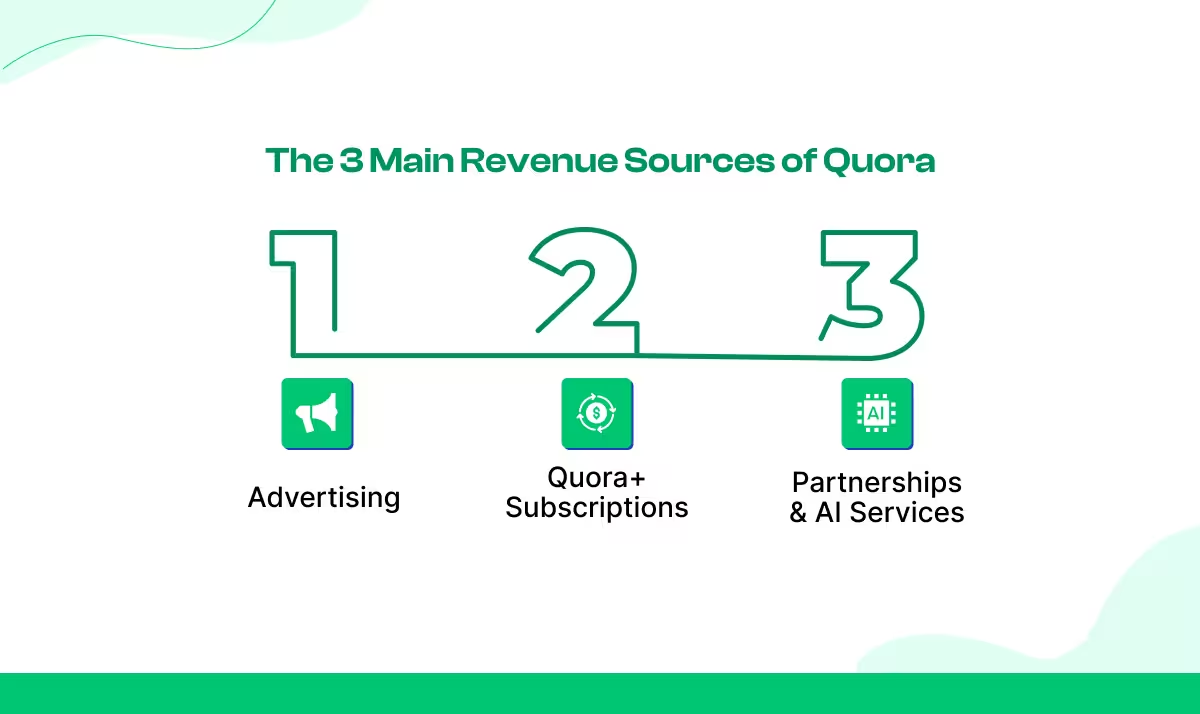
3 Major Ways Quora Generates Revenue
Quora’s business model focuses on a mix of advertising, subscriptions, and partnerships:
In 2026, Quora’s total projected annual revenue reached approximately $190 M, up from $120 M in 2024.
Quora Usage Statistics (Global & Regional)
Quora’s usage statistics indicate a large, globally diverse user base, solid engagement patterns, and a mobile-first audience.
Total Monthly Active Users (MAUs): Global Stats & Growth
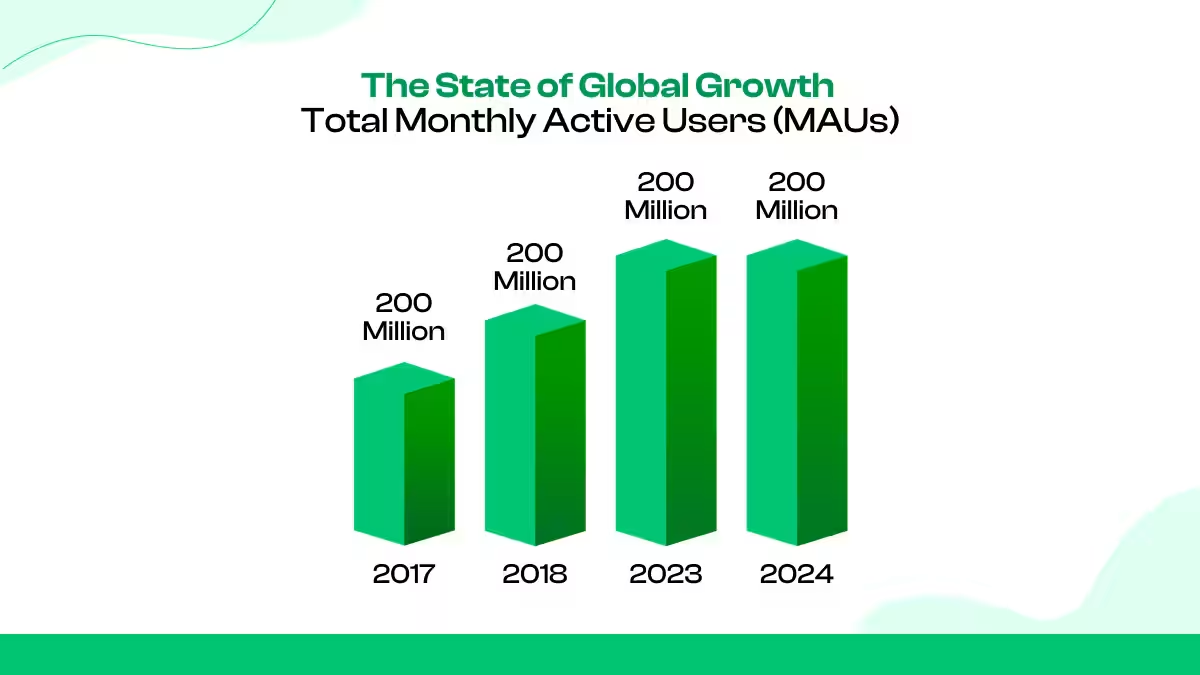
As of 2025–2026, Quora has surpassed 400 million monthly active users (MAUs) worldwide.
In 2018, the platform had about 300 million MAUs, showing a roughly 33% increase over that period.
[Source: Quora & DemandSage]
Daily Active Users (DAUs) & Engagement
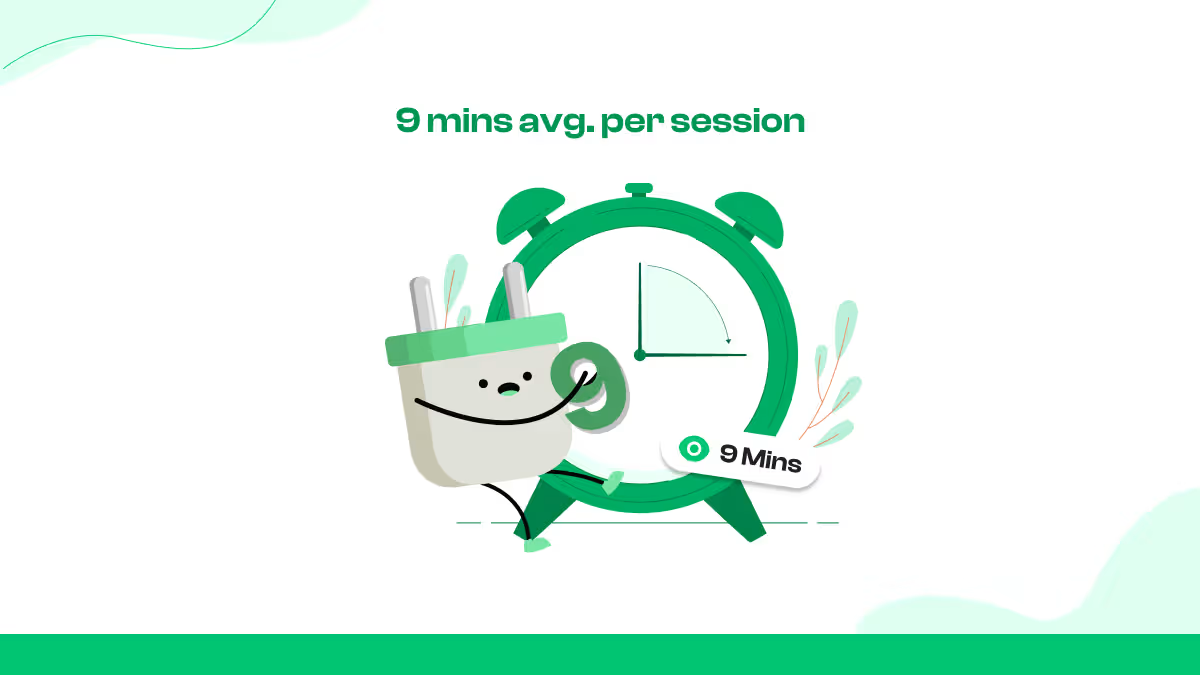
Quora attracts an average of 27 million daily visitors. Average session lengths tend to be high, with users often spending between 4 and 11 minutes per session.
While official DAU figures can vary by source, this level of daily activity shows that users are not just visiting occasionally but actively reading and interacting with content regularly.
User Growth Trends Over the Years (2020–2026)
Quora’s growth has been gradual and sustained rather than exponential:
[Source: Quora reports & industry data]
Quora Traffic by Country: Top Regions & Share
Quora’s user base and site traffic are geographically diverse but with notable regional concentrations:
Quora Users by Country (est.)
The United States accounts for roughly 36–39% of visits, followed by India at around 25%, with the United Kingdom, Canada, and Indonesia each contributing a few percent of total global visits.
Mobile vs Desktop Usage: Device Breakdown & Marketer Implications
Mobile dominates Quora usage globally:
Marketing implications
Quora User Demographics (2026)
Understanding who uses Quora is key for marketers, researchers, and content strategists.
Age Distribution of Users
Quora’s audience skews toward younger and mid-career adults, making it valuable for B2B and mid-funnel engagement:
This distribution shows that millennials and older Gen Z form the core of the platform’s audience, benefiting brands targeting young professionals and students alike.
Gender Distribution
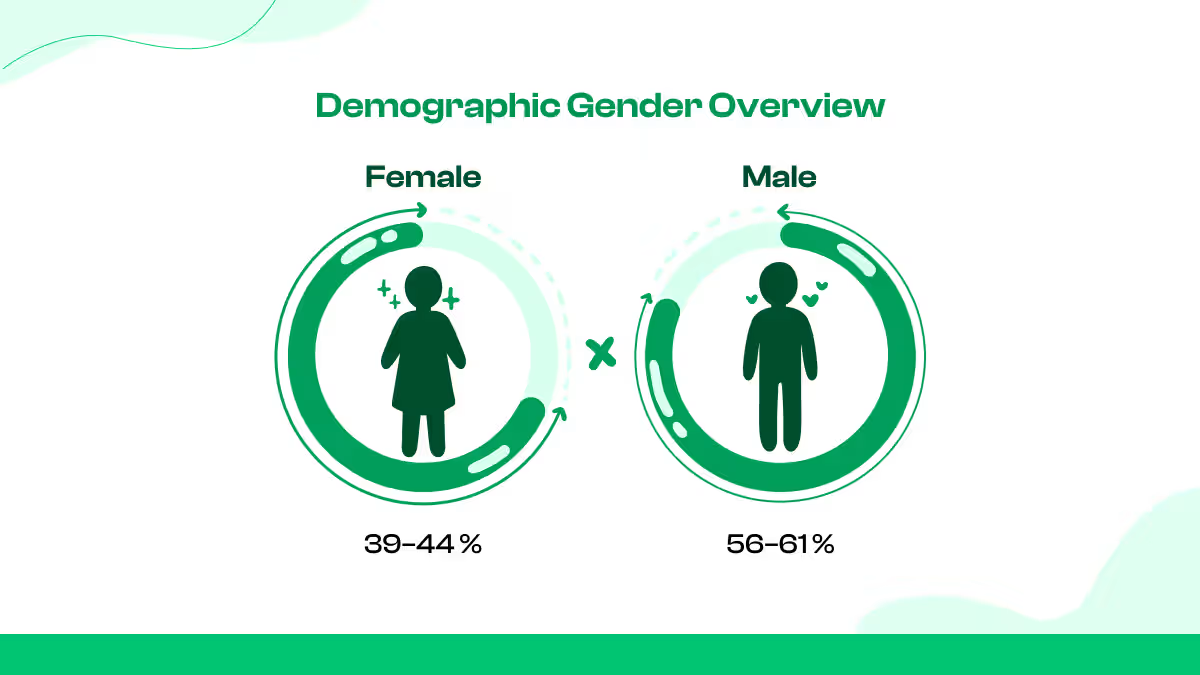
Quora has a male-leaning audience, though the gap is narrowing:
- Male: 56–61%
- Female: 39–44%
Education Levels
Quora users are highly educated compared with the general internet population:
- Over 65% have a college (bachelor’s) degree
- Around 28% hold graduate degrees
This makes Quora attractive for thought leadership, expert positioning, and educational content, as many users expect detailed, well-researched answers.
Income Levels
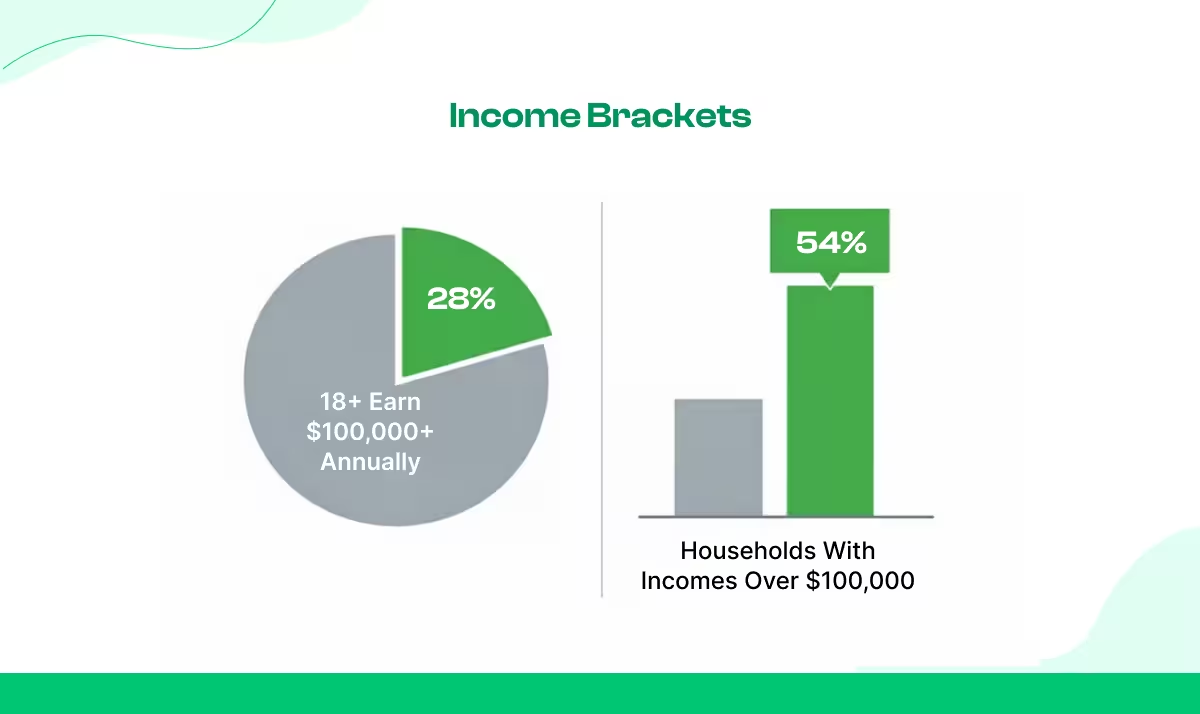
Quora draws a relatively affluent audience:
- Around 28% of users aged 18+ earn $100,000+ annually
- Around 54% come from households with incomes over $100,000
This income skew means Quora is a strong platform for marketers selling premium products, services, or B2B solutions.
Professional Backgrounds
While detailed profession breakdowns are not always fully reported, available data shows a substantial share of the audience comes from professional and leadership roles, and around 37% of users occupy management positions or higher
Regional & Country-Specific Stats
Quora’s user base is internationally distributed, though concentrated in specific regions:
Quora’s largest markets are the U.S. and India, but Western Europe and Southeast Asia also contribute meaningful user bases, beneficial for global reach.
Quora Engagement Statistics: How Users Interact With Content
Understanding how Quora users engage with content helps marketers and creators tailor their strategies for visibility, traffic, and influence.
Average Time Spent on Quora Per Session
Quora users spend significantly more time per session than on many social platforms, reflecting deeper reading behavior:
8–10 minutes per session on average, according to multiple analytics reports. This is notably higher than quick-scroll platforms like TikTok or Instagram, where session duration is often under 5 minutes.
Number of Questions and Answers Posted Daily
Users post between 3,000 and 7,000 new questions daily, which translates to roughly 90,000–210,000 per month. On average, most questions receive around 5 answers, though highly engaging ones can draw hundreds or thousands of responses.
Popular Topics & Most Discussed Categories
Quora’s engagement is distributed across hundreds of thousands of topics, but some categories draw especially high activity:
Top Topics by Followers (Millions)
Categories like Education, B2B/SaaS, Jobs, Finance, and Consumer Tech also see millions of questions and active discussions, making them fertile ground for niche marketing content.
Content Interaction - Upvotes, Shares, Comments, and Response Rates
Quora’s structure encourages interaction, but engagement patterns differ from those of typical social platforms:
Organic Search Contribution - % of Traffic From Search Engines
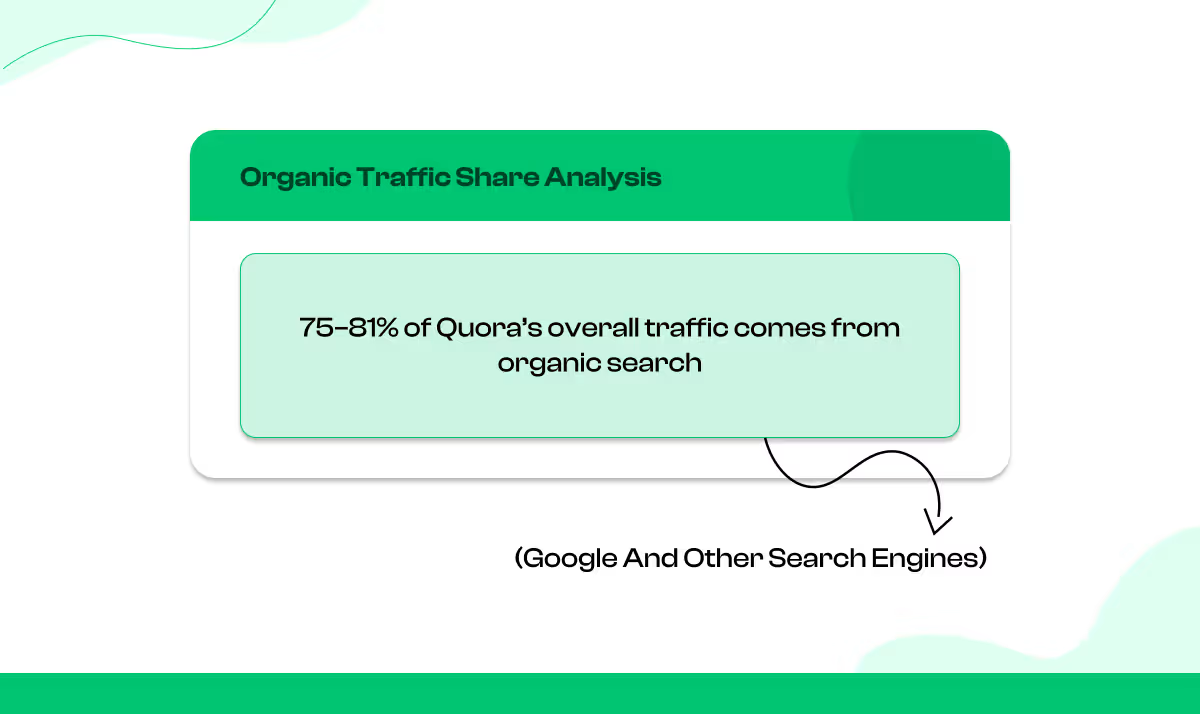
Quora’s engagement is heavily tied to discovery via search. 75–81% of Quora’s overall traffic comes from organic search (Google and other search engines).
Many of these organic visitors engage with multiple answers or follow topic feeds, contributing to longer sessions and deeper content interaction.
Social Media Referrals - % of Traffic From Other Platforms
Quora benefits from external referrals, though they represent a small portion of overall traffic:
Social media referrals account for roughly 0.7–0.8% of Quora traffic, with the majority coming from search and direct visits.
Among social sources, YouTube is consistently the top referrer, contributing around 30–34% of the small social traffic share. Reddit often follows closely. Facebook and LinkedIn contribute smaller portions.
Though a small slice of the pie, these social referrals are important amplification channels, especially for creators who repurpose answer content as short videos or threads elsewhere.
Quora Marketing & Advertising Statistics (2026): What Marketers Need to Know
Below are the latest verified insights into how Quora performs as a marketing and advertising platform, including adoption, ROI, formats, performance differences, and marketing trends relevant for both B2B and B2C brands.
Quora Ads Adoption: % of Businesses Using It
Quora’s advertising ecosystem continues to grow among marketers.
About 60% of companies advertising on Quora are B2B, while 40% are B2C, showing broad commercial adoption across sectors.
Over 150,000 businesses have active Quora Business accounts using targeted ad campaigns and analytics tools. Meanwhile, qround 27% of marketers plan to increase investment in Quora Ads.
Conversion Rate & ROI Insights
Quora’s native targeting and intent-driven format often result in strong ROI for advertisers. Quora Ads are reported to deliver up to 4× higher conversions compared with other platforms in niche and high-intent categories.
SaaS advertisers using Quora have seen significant increases in signups and lower CPA, such as 83% CPA reduction and 152% signup increase in case studies.
Conversion API (CAPI) and auto-bidding tools enhance measurement and bidding efficiency, helping marketers optimize budgets with machine learning support.
Mobile vs Desktop Ad Performance
Quora’s mobile usage patterns translate into notable distinctions in ad performance. Roughly 70-78% of Quora ad interactions occur on mobile devices, consistent with broader platform traffic trends.
Mobile ads on Quora tend to deliver higher click-through rates (CTRs) and lower CPCs than desktop equivalents due to the mobile-first interface and user behaviour. Features like AMP-optimized pages and in-app placements improve load times and engagement metrics on mobile.
For marketers, this emphasizes the importance of mobile-optimized creatives, landing pages, and CTAs to capture and convert high-intent mobile traffic effectively.
Popular Ad Types & Formats
Quora supports multiple ad formats designed to fit different stages of the marketing funnel.
This variety allows brands to tailor campaigns to awareness, consideration, and conversion objectives.
Most Followed Brands & Influencers on Quora
While comprehensive verified lists are not centrally published, certain enterprise and tech brands frequently appear as high-profile participants due to promoted content, thought leadership, and topic authority -- including major players like Amazon, Apple, Samsung, and others are adopting Quora Ads to reach research-oriented audiences.
These brands often pair organic expertise (high-quality answers) with paid amplification for maximum impact.
Emerging Trends in Quora Marketing
Current trends reflect dynamic changes in how brands approach the platform:
Marketers increasingly treat Quora as a complement to SEO, thought leadership, and intent capture strategies, not just an ad channel.
Paid vs Organic Content Impact
Organic content (high-quality answers) builds long-term authority and SEO value. Many answers rank on Google and continue driving traffic months later.
Paid campaigns accelerate visibility and conversion, especially when timely and aligned with organic expertise. Case studies show that combining promoted answers with organic contributions often amplifies overall engagement and traffic.
ROI perspectives indicate that Quora Ads can deliver lower CPLs and competitive CPCs compared to LinkedIn and other platforms.
ROI Case Studies & Examples
Quora Revenue, Valuation & Business Insights (2026)
Quora Revenue by Year: Historical and 2026 Estimates
Quora’s revenue has grown steadily as it diversifies beyond advertising. In 2023, the platform generated about $20 million in annual revenue from ads, Quora+ subscriptions, and monetization programs.
By 2026, Quora’s total projected annual revenue is estimated at around $190 million, with major contributions from:
This diversification has reduced reliance on ads to less than 55% of total revenue, giving Quora more stable long-term growth potential.
Valuation Insights: Funding & Market Value
Quora has raised capital across multiple rounds, with a notable $75 million funding raise in January 2024 led by Andreessen Horowitz to support AI expansion.
Recent market analysis places Quora’s valuation at approximately $2 billion – $2.5 billion in 2026, significantly higher than earlier estimates from the 2010s. This valuation reflects investor confidence in Quora’s hybrid model (knowledge + AI), global growth, and monetization strategy.
Business Strategy Overview: Monetization & Competitive Positioning
Quora’s strategy focuses on:
Quora vs Other Knowledge Platforms
Technical Q&A specialization
Compared to Reddit and Stack Overflow, Quora’s strength lies in search engine visibility and long-tail traffic, while LinkedIn and Medium are stronger in professional and storytelling contexts, respectively.
Quora vs Reddit Traffic Comparison
Quora Traffic & SEO Insights
Let’s have a look at Quora traffic and SEO insights.
Organic vs Paid Traffic Split
Quora’s traffic is highly organic. Around 80-82% of visits come from search engines, with direct visits making up much of the rest. Paid search and display ads contribute negligible direct traffic compared to SEO.
Top Keywords Driving Traffic
Quora ranks for millions of keywords on Google’s first page, especially for informational, problem-solving queries. Many of these are non-branded keywords (e.g., “best skincare routine,” “how to learn Python”), which represent approximately 75–80% of organic traffic.
Branded keywords (mentioning specific companies or products) make up a smaller share but still contribute to niche visibility, especially for marketer-generated Q&A content.
Referral Traffic Insights
While organic search dominates, social referrals still play a role:
These referral patterns show that Q&A content can be amplified through related communities and video platforms.
SEO Opportunities for Marketers
For businesses and content creators, Quora offers several SEO advantages:
Research suggests that answers with structured content and depth (700+ words with keywords) tend to rank more frequently in search results.
Platform Features & User Experience Insights (Quora 2026)
Quora comes with various features that help users have an enhanced platform experience.
Quora Spaces & Communities
Quora Spaces are topic-focused communities where users can curate related questions, answers, and posts under a shared interest. Spaces function like community hubs, enabling deeper discussion and centralized discovery of niche content.
Space owners have access to analytics that show views, upvotes, comments, activity trends, and top contributors. It helps them optimize engagement and growth within their Space.
Spaces help creators build loyal micro-audiences, especially around different topics like SaaS, AI, parenting, or fitness. This format encourages ongoing discussion, rather than isolated question-answer interactions.
Mobile App vs Web Experience
Quora’s mobile usage is dominant: nearly 76% of traffic comes from mobile devices, with desktop accounting for about 24% of usage.
The Quora mobile app sees over 100 million installs on Android alone and often delivers a more consistent experience due to push notifications, in-app analytics, and optimized browsing behaviors.
Mobile App Insights
Users open the app about 2.3 times daily on average and are 85% likely to remain active after 90 days, showing strong retention in the mobile environment.
In-app engagement (including ad clicks) is significantly higher than on desktop, and mobile users typically scroll through more questions per session.
From a marketer’s standpoint, mobile-first content and ads are essential due to higher engagement, faster scroll behavior, and stronger CTA interaction on small screens.
Quora+ Paid Subscription Insights
Quora+ is the platform’s subscription monetization feature, providing access to exclusive answers and content behind a paywall. In 2026, Quora+ subscription pricing sits around $6.99/month or ~$48.88/year, often with a free trial to encourage adoption.
Subscribers get an ad-reduced experience and premium answers from creators who opt into Quora+. This model gives influencers and subject-matter experts a way to earn for their content while retaining engagement from paid audiences.
Platform Usability & Navigation Statistics
Over 300,000 topics exist on Quora. This gives users a rich taxonomy for discovery. Users typically follow multiple topics and questions, creating personalized content feeds.
Quora’s search-centric design means many sessions start with a query rather than browsing feeds, leading to search + related feed navigation patterns rather than endless scrolling.
Detailed Engagement Metrics
Let’s have a look at the engagement metrics for Quora.
Question-to-Answer Ratios
On average, questions posted on Quora receive about 5 answers each, though some highly popular or trending questions attract far more responses.
Daily question volume ranges between 5,000 and 7,000 new questions, totaling roughly 150,000–210,000 monthly questions. This high answer rate means most questions are answered within hours or a day.
User Retention / Returning Users
Around 60% of users return weekly. It indicates habitual engagement rather than one-off visits. The average session duration ranges from 4 to 11 minutes, showing that users spend meaningful time reading answers and exploring related content.
Upvotes / Shares / Comments per Post
Popular questions can attract thousands of views and hundreds of upvotes over time. Average upvotes per question/answer vary widely by topic and quality, but answers with 400+ words and images tend to earn more upvotes and shares.
Comment interactions occur in about 60% of answers that receive comments, demonstrating active discussion around nuanced content.
Top Topics by Engagement
High-engagement topics include:
These categories have tens to hundreds of millions of followers and consistently high interaction rates.
Interaction patterns show that:
- Niche technical or professional topics (e.g., SaaS, AI, career advice) often produce more answers with higher average upvotes and longer discussions.
- Evergreen “how-to” questions drive consistent engagement and long-term traffic, as users repeatedly stumble upon these answers via search.
Insights for Marketers
This suite of engagement metrics shows that Quora isn’t a fast-scroll social feed. It’s more like a knowledge engine with search and community features.
High-quality content can stay relevant for months or years, and topic engagement signals are strong indications of audience interest. Content marketers benefit from focusing on depth, relevance, and topical authority rather than frequency alone.
Interesting Quora User Facts & Behavioral Insights (2026)
Some of the interesting facts and behavioral insights regarding Quora are-
Gender & Response Patterns: Males vs Females
Quora’s user base is male-leaning, though the gap has narrowed over time: about 56–61% of users are male, and 39–44% are female as of 2025–2026.
Male users tend to dominate tech, finance, and business discussions, while female users participate strongly in health, education, lifestyle, and work-life balance topics.
This results in distinct interaction patterns. Male-oriented topics often see more technical answers and upvotes, while female-oriented discussions draw nuanced personal and experiential responses.
Management & High-Income User Concentration
Quora skews toward professionals and higher-income individuals. Nearly 28% of users earn over $100,000 annually, and 54% are from households above that threshold.
Around 37% of users report management or leadership roles, indicating a strong presence of decision-makers and mid-career professionals.
Average Questions Answered Per User
Quora doesn’t publicly share a definitive per-user answer metric, but average engagement can be inferred from platform patterns:
On average, each question receives about 5 answers, suggesting frequent participation among active contributors.
Many experienced contributors answer multiple questions daily to build visibility, especially in high-traffic topics.
While a small share of users post most of the answers, returning users often participate repeatedly. It indicates that answering quality questions is a reliable way to build a follower base.
Most Popular Questions & Spaces
Some categories consistently generate high interaction on Quora.
Technology remains one of the most subscribed and active areas, with more than 140 million followers. Other widely followed spaces include Health, Education, Finance, and Jobs/Career.
Examination of trending and high-interaction Spaces shows that topics with practical, decision-oriented questions (e.g., “best programming languages to learn” or “career advice for data scientists”) draw sustained attention and diverse answers.
Trends in Content Creation & Consumption
AI & Content Behavior
AI topics and usage patterns are rising sharply on Quora. In AI-related discussions, a majority of surveyed users report engaging with AI tools like ChatGPT, with over 65% saying they’ve used or referenced AI tools recently.
Remote Work & Education
While niche topics like Remote Work have smaller overall followings, they reflect active interest in modern work trends and learning behaviors, particularly among younger professionals and students.
Educational content, such as questions about career development, skills, courses, and academic pathways, continues to be a strong driver of engagement.
Key Takeaways & Insights for Marketers
Quora remains a high-intent, knowledge-driven platform with 300+ million monthly users, making it especially valuable for marketers targeting users who are actively researching answers, products, or solutions.
Essential Numbers & Trends
Fast-growing topics: AI, SaaS, career growth, education, finance, and remote work.
Key Opportunities for Marketers
Actionable Strategies
Final Thoughts
Quora in 2026 sits somewhere interesting. It's part search engine, part community hub, part AI experiment. Over 400 million people use it every month. Most of them have college degrees and decent paychecks. They find answers through Google, stick around to read, and come back next week.
This isn't TikTok. Nobody's dancing here. People show up with real questions. They want answers that actually help. If you write something useful, it might get traffic for years.
Frequently Asked Questions
What is Quora’s global traffic ranking?
Quora typically ranks within the top 100–150 websites worldwide and top 50 in the US, driven largely by organic search traffic.
How Quora Makes Money?
Quora runs on ads and subscriptions. The ads match what you're reading about. Businesses love it because Quora users are educated and actually spend money. Starting a campaign costs as little as $25. Quora+ is the subscription option. Pay $5 to $7 monthly, and you get no ads plus access to premium content. Quora Spaces works similarly. Owners can charge for access to their private communities. Quora takes about 40% of that fee. The company pulls in around $20 million yearly despite 300+ million monthly visitors.
Is Quora effective for marketing?
Yes. Quora is effective for B2B, thought leadership, and high-intent marketing, offering strong organic visibility and targeted ad options.
Is Quora growing or declining?
Quora pulls in over 400 million people each month. That's not a small crowd. Back in 2018, they had around 300 million. By 2023, they hit 400 million. Some reports now say 430 million in 2026.
What are Quora’s most popular topics?
Top topics include Technology & AI, Business, Careers, Education, Health, Finance, and Self-Improvement, with growing interest in AI and remote work.
How much time do users spend on Quora daily?
Users spend around 10–15 minutes per day on average, with higher engagement for in-depth, informational content.

Tasnim is a content and digital marketer born in Dhaka, Bangladesh. For over thirteen years, Tasnim has worked as a freelancer for several social media marketing companies. He has acquired skill sets in copywriting, content marketing, SEO & social media marketing. He’s one of the founding members of SEOSkit, a very exciting search engine marketing startup. In his free time he likes to travel, read, and make failed attempts at music.
0 Comments
Great tips! I never realized how much engagement impacts growth more than just posting frequently. I've been focusing only on content, but now I see how interacting with my audience can make a difference. Time to step up my strategy!
Super helpful article! I always thought Facebook Groups were just for discussions and never really considered them as a tool for growing followers. The idea of actively engaging and sharing valuable content in relevant groups makes so much sense. I'll definitely start participating more and see how it impacts my page. Thanks for the great advice!