

LinkedIn acts very differently from other social media sites. People do not open the app to watch funny videos. They log in to talk about work, business, and careers. That single difference changes how LinkedIn marketing works.
This guide gives you a real blueprint. You might be starting from scratch today. You might already post every week and want better results. Either way, this guide holds clear steps you can use right away.
We cover the entire system in simple terms. You will learn about personal profiles, company pages, original posts, networking, direct messages, and paid ads. Every section works on its own. Jump straight to whatever topic you need most today.
What LinkedIn Marketing Means
LinkedIn marketing means using the website with a specific goal. You build attention for your brand, find new clients, connect with other professionals and more. This strategy uses personal profiles, company pages, written posts, and paid ads. All of these work toward a particular goal.
This effort is very different from just opening an account. Many users leave their profiles totally empty. Companies often post once a year and stop. That inactive approach is the right one for LinkedIn marketing. Showing up regularly with a strong plan is the right approach here.
You can market your business in two different ways. Free marketing is called organic activity. You publish posts, leave comments, and build real connections. Paid marketing uses official ads. Ads that help you reach people who do not follow you yet. Most winning brands use free posts and paid ads together for the best results.
Quick Reference: LinkedIn Marketing at a Glance
Why LinkedIn Marketing Matters for Businesses
LinkedIn is important because it connects you with decision makers. Finding these leaders on basic social apps is very hard. This is what makes LinkedIn B2B marketing so effective for selling products to other companies.
Mindset matters a lot here. Most social apps serve as places for fun videos or chatting. LinkedIn serves as a place for career growth. People on LinkedIn are ready to pay attention to work messages and better business opportunities.
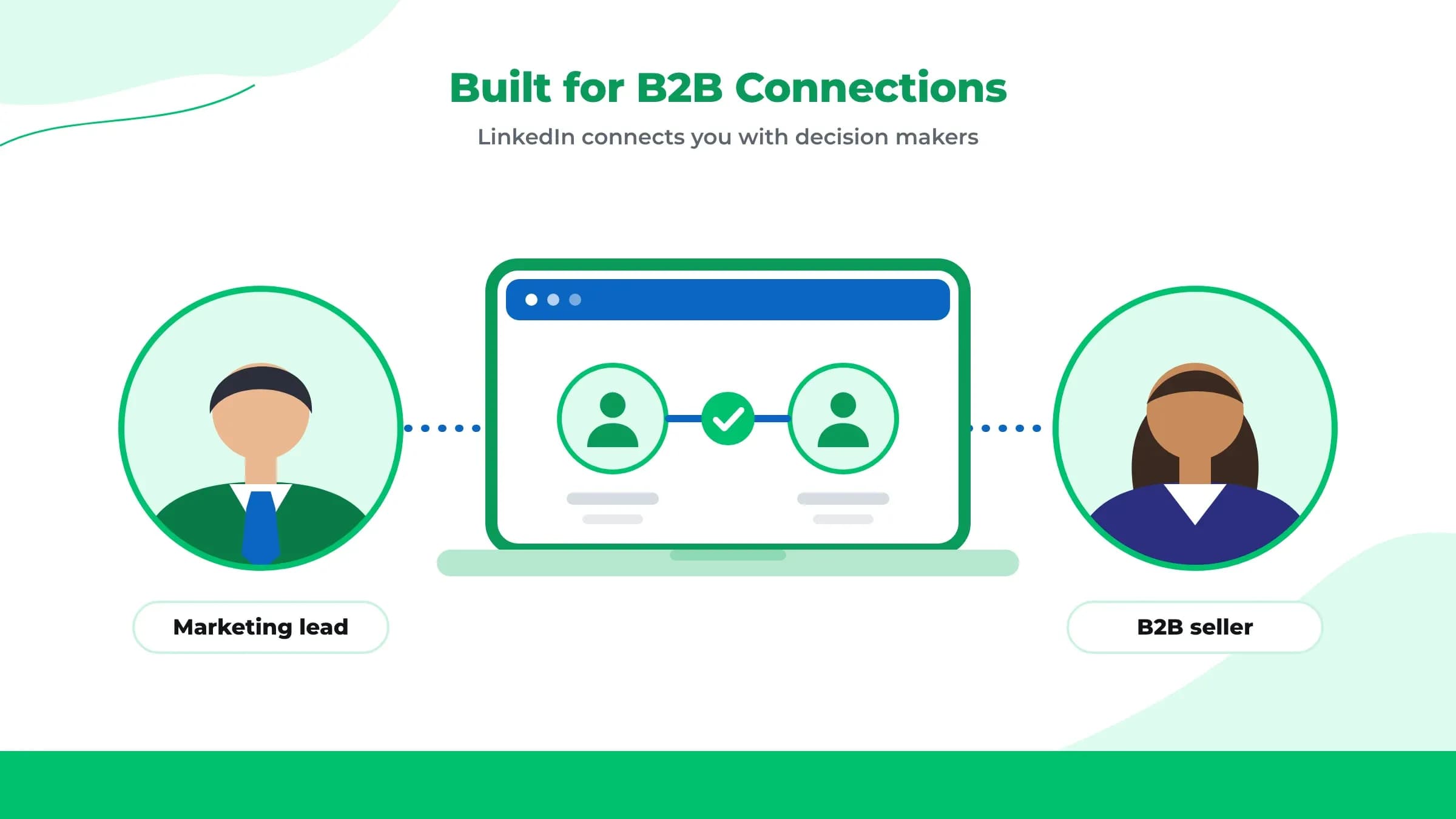
You can target your exact audience as LinkedIn tracks job titles, company sizes, worker levels, and industry types. Other social apps do not collect this work data. A firm selling to marketing leads can pinpoint those exact users.
However, LinkedIn marketing for business does not fit every business model. A shop selling shoes to everyday buyers might skip it. Business to business sellers, recruiters, and consultants get a clear advantage on LinkedIn, a point Sprout Social backs up with platform-wide engagement data.
LinkedIn Profile vs Company Page: Which to Use
A personal profile helps you build one on one relationships. It is where most direct chats happen. A company page helps your brand reach a larger audience. You also need a company page to run LinkedIn ads.
Each option serves a unique purpose. A personal profile belongs to a real person. People connect with it, comment on it, and message it the way they would talk to another person. That is how real trust grows on LinkedIn. The company page represents the business unit. It cannot send out connection invites or chat like a human. But it can share company news, launch ads, and give your company a solid base.
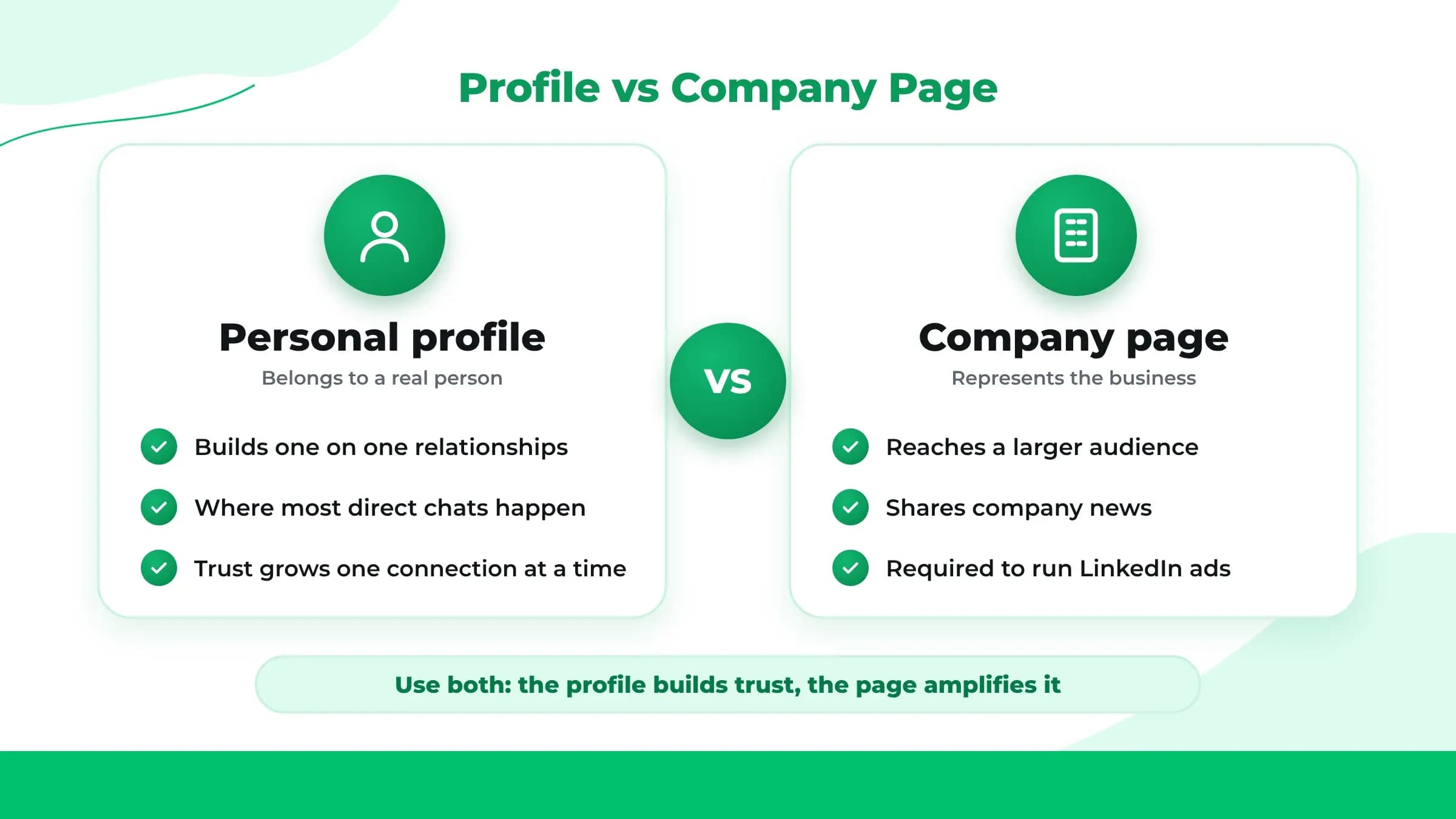
A smart LinkedIn marketing strategy combines both options. An owner or team member shares posts personally. This builds strong trust one connection at a time. The company page amplifies that message across the whole platform. It also provides the setup for paid advertising.
Using only one type of page limits your success. A firm with only a company page loses the power of personal trust. A business relying only on personal profiles lacks a true brand home. That firm also cannot run any LinkedIn ads.
Setting Up a LinkedIn Presence for Marketing
If you're still figuring out how to market on LinkedIn, smart marketing starts with setting up your profile correctly. You need a sharp headline, a clear “About” section, and an official company page. Build these pieces first before planning posts or launching ads.
Optimizing a Personal Profile for Marketing
A good profile explains what you do and who you help. It does not just list past job titles. Many people skip this basic step.
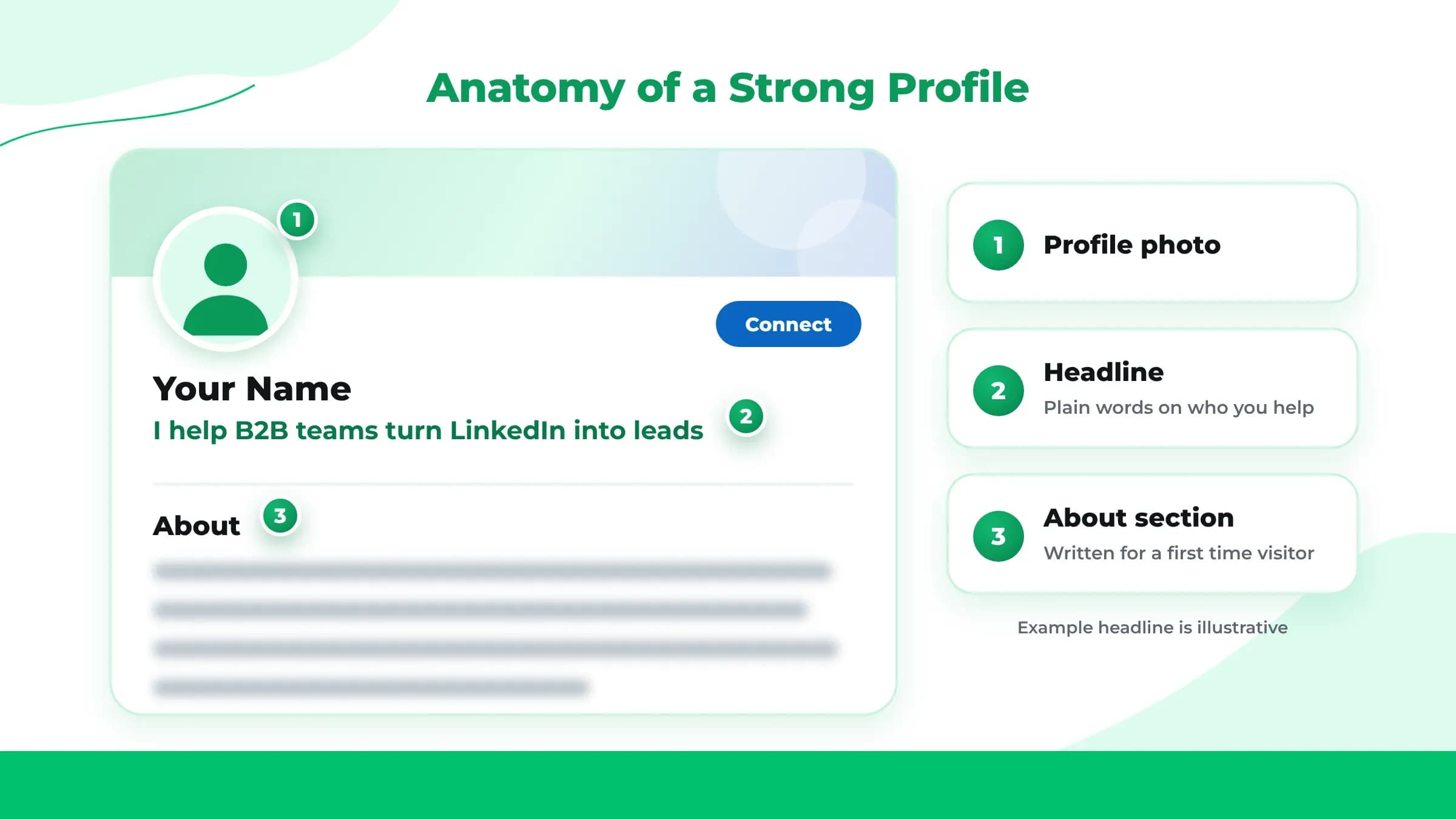
Your headline sits right next to your name. People see it in search results and in the feed. A weak headline just repeats your job title like "Marketing Manager at XYZ Company." A strong headline uses plain language to show how you help people.
Your “About” section needs that same care. Use your own words to explain your work. Write it for a stranger who visits your page for the first time.
Use the featured section on purpose. Pin your best posts, articles, or web links to the top of your profile. If you're adding a resume to your profile, place it here too so recruiters and clients see it first. Do not leave it empty or show random posts.
Change your custom link as well. LinkedIn gives you a long random link by default. Clean it up so it shows just your name. A clean link looks sharp on business cards and email signatures.
Setting Up a Company Page That Converts
A good company page uses a clear banner, a real about section, and a clear next step. Missing any part leaves visitors confused.
The banner picture sits right at the top. It gives visitors their first visual idea of your brand. Change the plain default background to match your brand style.
The about section must explain your work in plain words. State what your business does and who you serve. Avoid confusing words that mean nothing.
Add a clear call-to-action button. Tell visitors to visit your website, follow the page, or send a message. Remember that you must have a company page to run LinkedIn ads later.
LinkedIn Content Strategy: What to Post
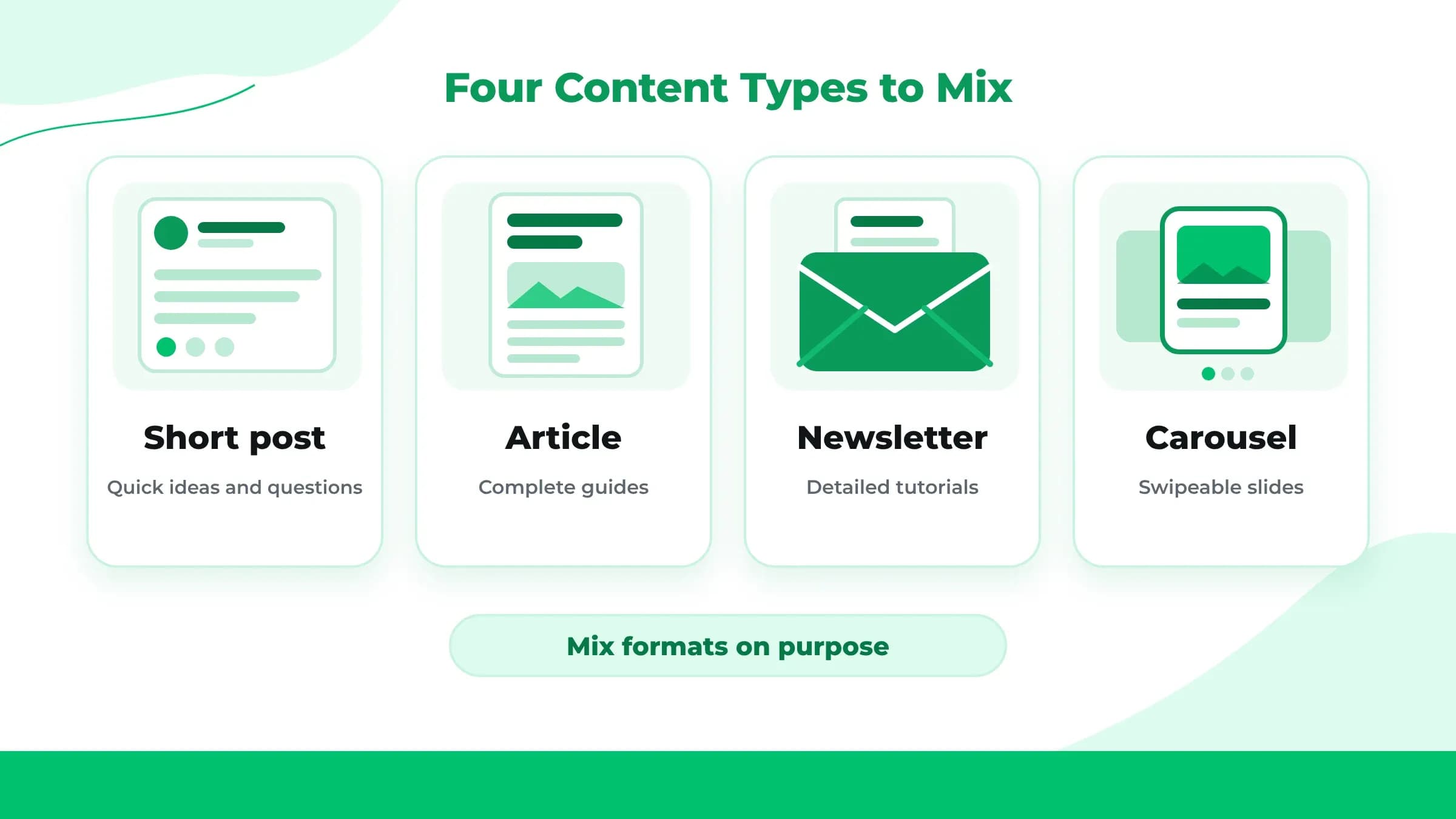
Strong and effective LinkedIn content mixes different lengths and formats. Avoid posting the exact same format every day. Combine short updates, helpful tips, full articles, and newsletters. A working LinkedIn content strategy mixes these formats deliberately, since every type of post serves a clear purpose.
Short Posts vs Long Form Content
Short posts work well for fast ideas and quick questions. They spark fast discussions in your comment section. Long form posts and newsletters fit detailed tutorials. They show your deep knowledge over time.
A short post is easy to read while scrolling. It handles quick views, fast tips, or simple questions very well. A long article needs more reading time. It gives you space for complete guides and detailed breakdown pieces. It helps people see you as a true expert in your industry. Both formats play important roles on the platform.
Sharing External Links and Articles
Never post a website link by itself. Always share your own thoughts first. People on LinkedIn want your personal take. They do not just want a link pointing somewhere else.
A plain link with a headline makes readers do all the work. They must guess why the link matters. Starting your post with a clear takeaway gives people a reason to stop scrolling. Tell your readers what you learned from the article. Explain why it helps their work. This small habit gets more clicks and comments every time.
LinkedIn Posting Best Practices
Consistency matters much more than high frequency on LinkedIn. A slow, steady routine beats posting constantly for a week and then vanishing.
Building a Consistent Posting Cadence
A predictable schedule helps followers count on your content. That steady pace turns your posts into a natural habit for your audience, which lines up with how Hootsuite's breakdown of the LinkedIn algorithm says the platform rewards consistency over volume.
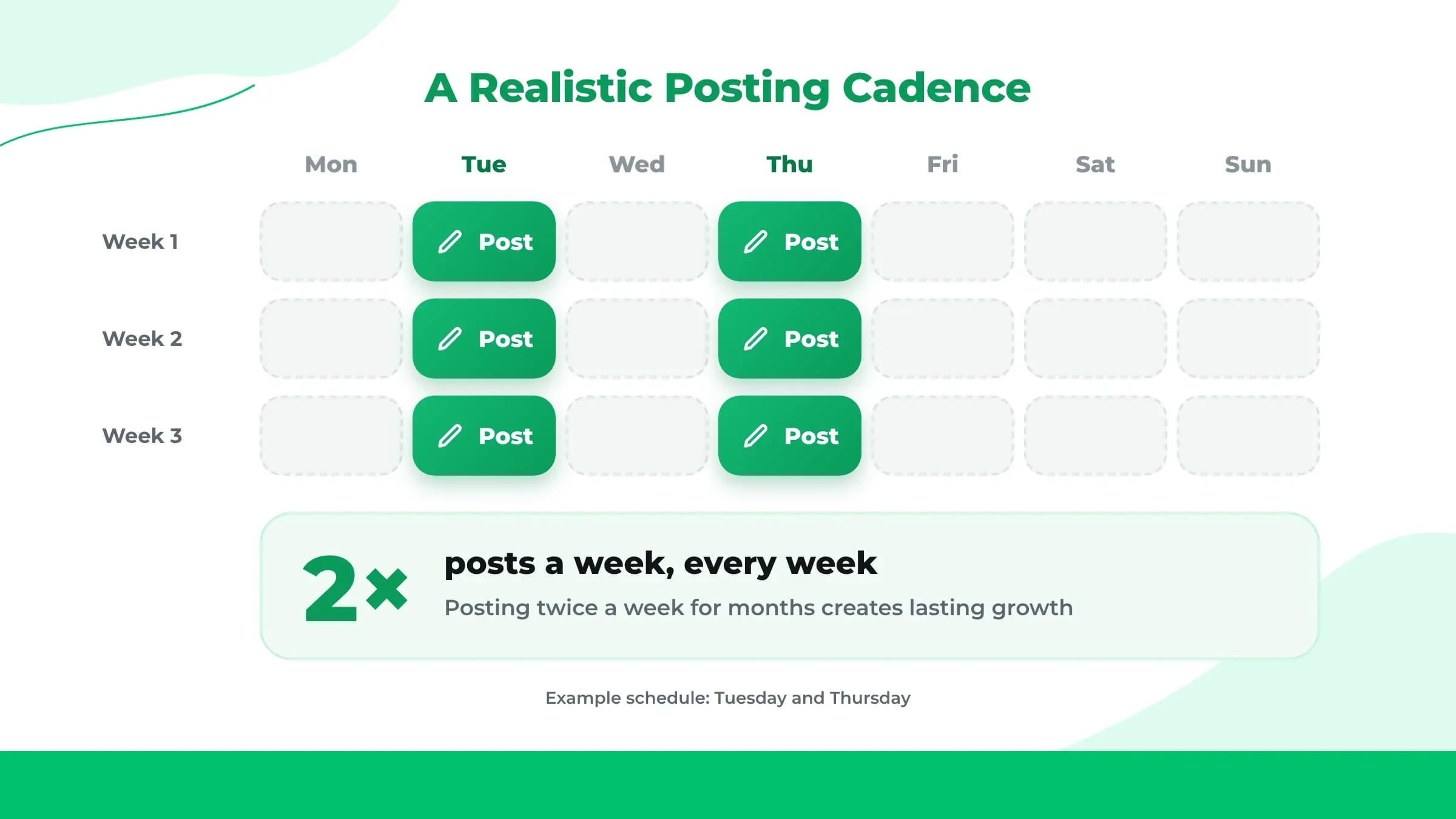
Pick a rate you can handle without stress. Do not lock yourself into an intense plan that falls apart in a month. Posting twice a week for months creates lasting growth. Daily posting for ten days followed by weeks of silence kills your reach. Increase your pace only when your main routine feels natural. Pairing a steady cadence with the best times to post gets your content in front of more of your network before it scrolls past.
Using Hashtags Effectively
Hashtags group your posts into specific subjects. They help new people discover your content while searching for clear topics. However, adding extra hashtags will not instantly double your views.
Use a small set of tags that fit your exact message. Accurate tags show LinkedIn where to direct your post. Stacking your text with dozens of random tags makes your page look spammy without adding any real audience. Use hashtags as basic labels for your topic.
Growing a Network and Engagement on LinkedIn
True networking takes more than pushing out your own updates. You need a complete profile, personalized connection notes, and regular replies on content from other users. These habits build true professional connections.
Personalizing Connection Requests
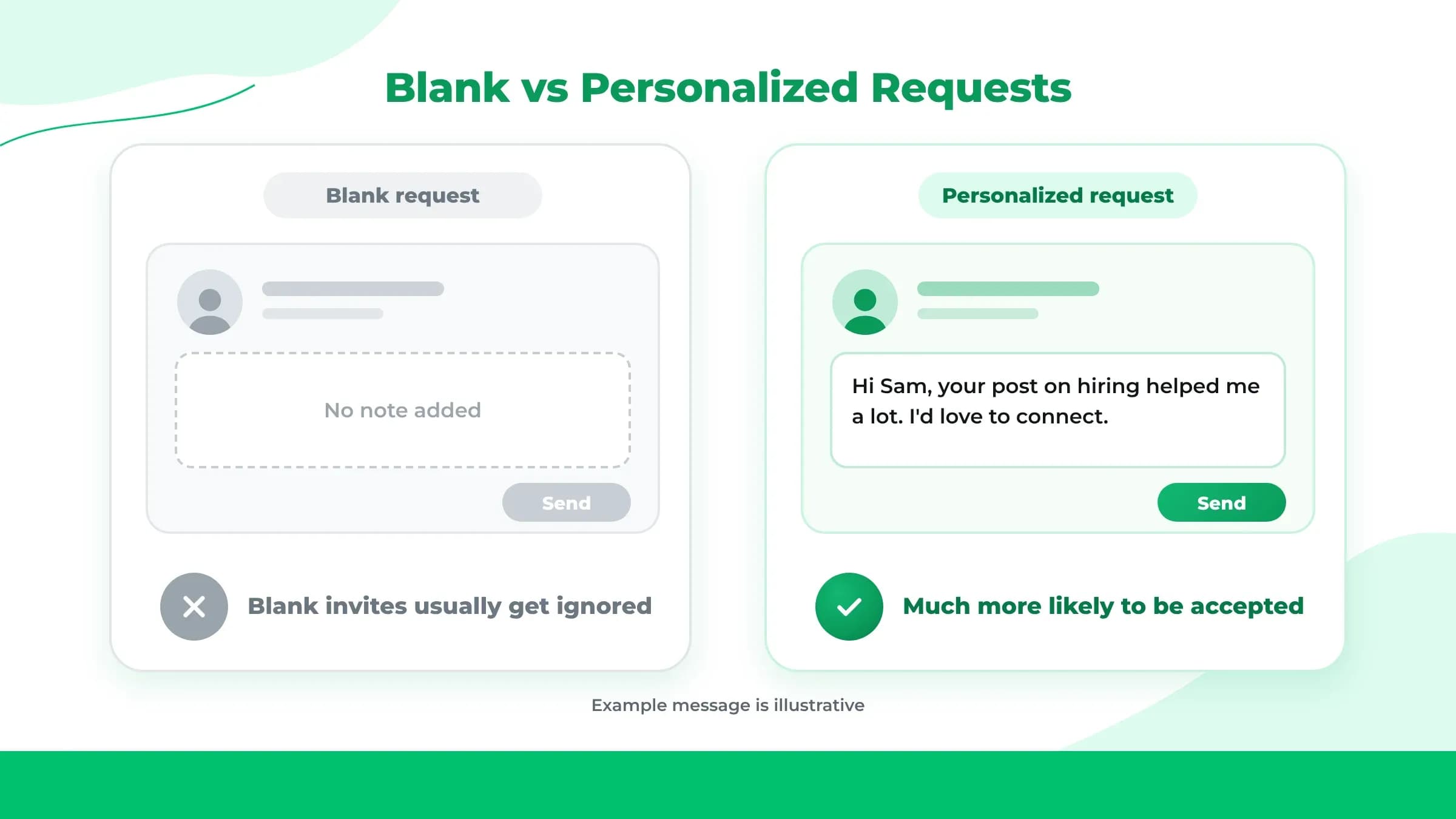
Blank connection invites usually get ignored. A quick personal message converts a cold request into the start of a genuine connection.
Include a personal detail in every request. Talk about a common friend, a recent post, or your exact reason for reaching out. Telling someone why their recent post helped you makes them much more likely to accept your invite. This habit alone does more for growing your connections than any bulk outreach tool ever will.
Engaging With Other People's Content
You can stay visible by liking, commenting on, and sharing posts from other creators. This approach takes far less work than writing original posts every single day.
Drop smart comments that add extra value to the topic. Avoid generic praise that everyone skips over. Clear comments attract the original poster and other readers. Consistently talking with others expands your reach in ways solo posting cannot match, and it's often the fastest route to getting more likes on your own posts.
Using LinkedIn Groups
Groups give you a way to meet professionals who share your exact job interests. Some groups host vibrant discussions, but many sit completely empty.
Inspect a group carefully before joining the conversation. Check when people last posted and whether members leave actual replies. Keep in mind that building a new group from scratch takes months of effort, so joining active existing groups often works better.
Using LinkedIn Direct Messages for Marketing and Outreach
Smart direct messages on LinkedIn stay short, friendly, and personal. They focus on a clear reason for talking. This style beats sending massive group messages to random accounts.
Get straight to the point in your first message. Point out something special about their profile or explain your reason for writing. Skip long sales speeches that take forever to read. If you do not get a reply, one friendly follow up note is plenty. Sending constant pushy messages makes people block your account.
Always check your tone before hitting send. LinkedIn is a site built for work. Hard sales pitches usually end up ignored or reported. Write to people like a respected coworker. State your purpose clearly, and you will get far better results.
LinkedIn Advertising Options
LinkedIn offers several distinct ad formats built for different goals. These include sponsored content, message ads, lead generation forms, and text ads, each suited to a different part of a marketing plan.
Sponsored Content
Paid posts on the LinkedIn feed are called sponsored content. LinkedIn marks these posts with a promoted tag. They let you reach a much larger crowd than standard free posts.
Most advertisers choose this style first. You can use single photos, videos, swappable pictures, or documents. These ads match the look of regular feed updates, so they feel natural to readers, a format LinkedIn covers in detail on its own marketing blog.
Message Ads
Message ads deliver targeted notes straight to a user's private inbox. They help you reach potential clients in a personal way. This format used to be called Sponsored InMail.
Inbox messages stand out right away. Many users skip feed ads but still check their inbox notifications. LinkedIn controls how many message ads a person receives. That keeps the inbox clean and prevents messages from looking like spam.
Lead Generation Forms
Lead generation forms attach to your ad and collect user details directly on LinkedIn. They remove the need to send readers to an outside website.
When someone taps your ad button, the form opens with their profile data already typed in. Their name, job, and company appear instantly. The user just clicks one button to complete the form. This easy setup converts many more readers into real leads.
Text Ads
Text ads are small, low cost ads that sit on the side of the screen. They do not appear in the main feed. They are the cheapest ad option on LinkedIn.
Because text ads sit off to the side, fewer people pay attention to them. However, they cost much less money to run. They are great for small businesses testing ads for the first time on a low budget. They also take very little work to create.
How to Measure LinkedIn Marketing Performance
Tracking your results involves watching post engagement and page growth over time. Built in analytics tools track these stats on personal profiles and company pages.
Check your posts to find out which ones get the best response. Look for helpful patterns in your numbers. You will see that specific topics, formats, or times perform better after you share multiple posts. Track your main follower numbers and total views each month instead of judging single updates. Understanding views versus impressions will stop you from reading too much into a single spike.
Connect these metrics back to actual business results. Lots of comments and likes feel good. You need to verify if those interactions turn into site visits, new followers, or sales. Simple vanity metrics do not mean your business is growing.
Common Mistakes in LinkedIn Marketing
Among the most overlooked LinkedIn marketing tips: using LinkedIn as an online resume ruins your results. A page that only shows past job titles without active posts misses out on true marketing benefits.
Sending plain connection invites hurts your outreach efforts. Blank requests get skipped quickly. You waste a prime moment to start a clean conversation with a clear reason.
Tagging people without permission annoys your network. Users dislike getting tagged in irrelevant updates. This pushy trick damages real connections fast.
Posting content on a messy schedule limits your success. Publishing one amazing update and disappearing for a month fails to build trust. Constant regular effort always yields better results.
Conclusion
Successful LinkedIn marketing requires a balanced approach across the entire platform. Sharing helpful content, connecting with real people, and running paid ads all serve distinct purposes. Top brands combine these three tactics to reach their target audience and win new leads.
Both personal profiles and business pages deserve your full attention. Set up each page on purpose instead of treating it like a quick chore. A clean setup builds instant credibility with every new reader who visits your page.
Stop posting reactively without a solid blueprint behind your work. Outline your main topics, set a steady schedule, and show up consistently every week. True growth comes from showing up with a clear plan.
Frequently Asked Questions
How often should a business post on LinkedIn?
Do personal profiles or company pages get better organic reach?
Can a small business use LinkedIn ads with a limited budget?
Is LinkedIn worth using for a consumer facing business?