

Most social media posts disappear from your mind the second you scroll past them. A few special posts attract you to pause, read, and respond. That active response is social media engagement.
In simple terms, social media engagement is any action someone takes on your post beyond just seeing it. It tells you that your message actually reached a real person. This is why active responses mean far more than a large follower count. A big follower count looks nice, but active followers are the ones who buy products and share your brand.
This guide helps you master social media engagement step by step. You will learn what it means, see how your account measures up, and discover easy ways to boost your numbers.
What Is Social Media Engagement and Why Should You Care
Social media engagement is any action a person takes in response to a piece of content, beyond just seeing it.
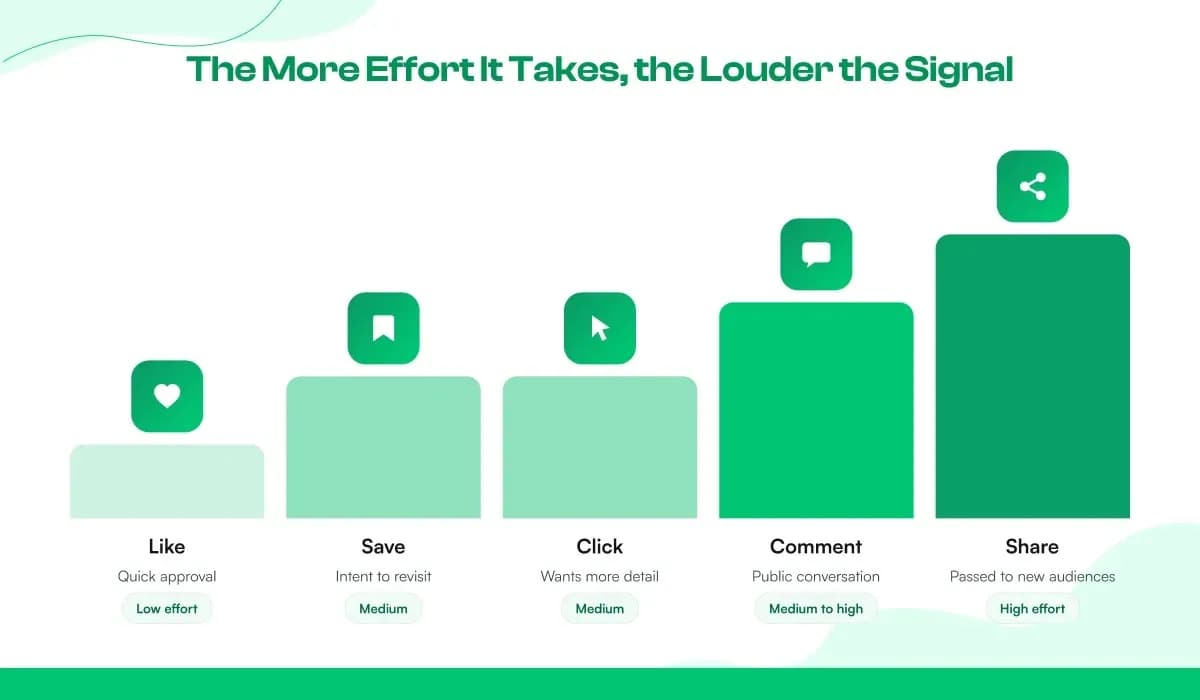
Marketers track five main types of social media engagement to evaluate performance: likes, comments, shares, saves, and clicks.
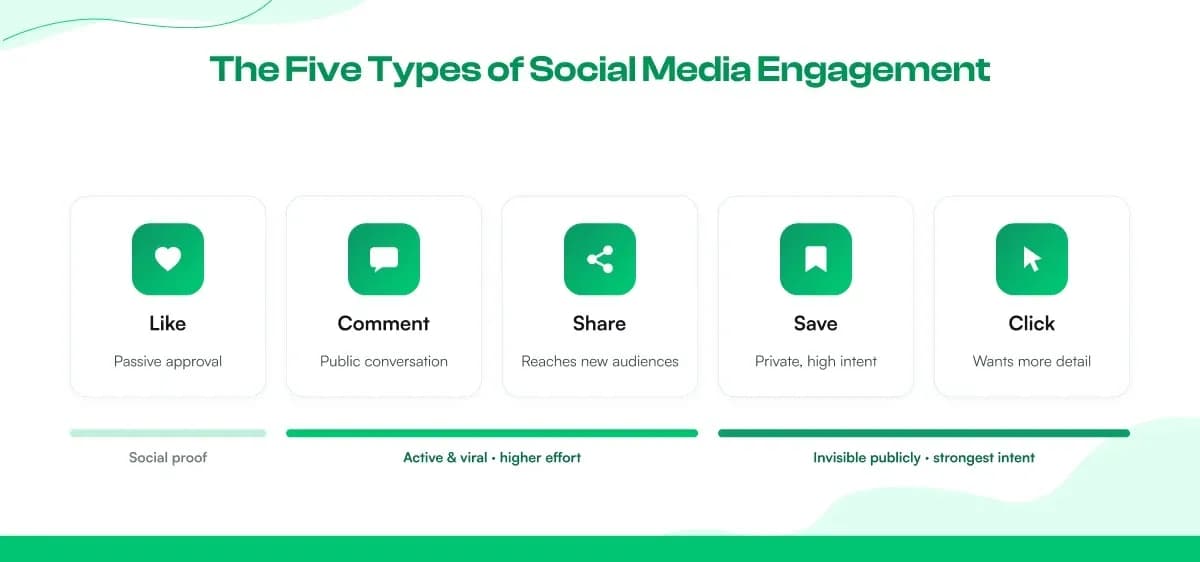
A simple like represents a fast, passive reaction that builds basic social proof. Comments and shares represent active engagement, requiring higher cognitive effort and driving organic viral distribution. Saves and link clicks measure direct user interest and conversion intent, though they remain invisible on public profiles. Algorithms process these distinct actions as quality scores to determine how broadly content gets pushed across the network.
Understanding these basic interaction signals helps you analyze why specific engagement metrics carry far more strategic value than others.
Social Media Engagement vs Reach: Which Metric Matters More
Reach is the total number of unique users who view your content, whereas engagement tracks the specific actions people take in response to those views. Reach answers how far your content traveled across a network. Engagement answers whether your content actually convinced anyone to interact.
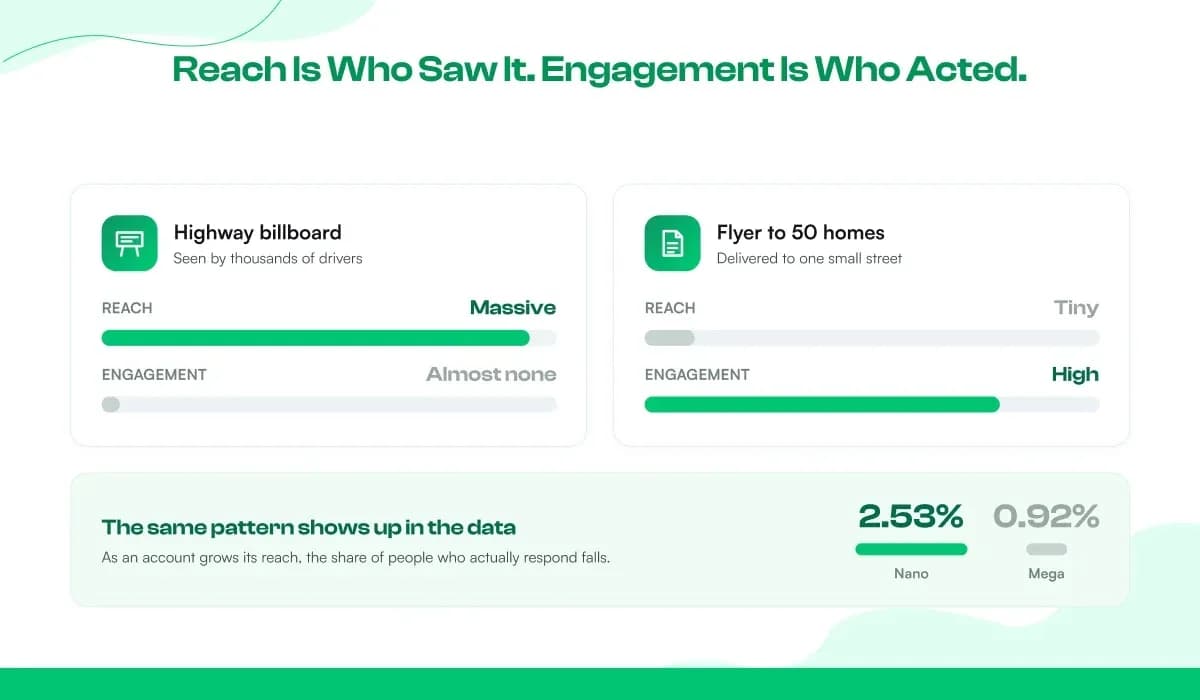
A high reach number does not guarantee marketing success on its own. For example, a highway billboard generates massive reach from daily commuters, but yields virtually zero engagement because drivers cannot take immediate action. A personal flyer delivered to fifty local houses achieves low reach, but yields high engagement when homeowners call the phone number listed on the paper.
This real world pattern matches digital audience data across every major platform. Benchmark studies reveal that smaller accounts consistently outperform larger ones in audience response. Nano influencers earn a 2.53% engagement rate, while mega influencers average only 0.92%. As an account expands its total reach, the percentage of active responders naturally declines.
For more benchmarks like this, see our influencer marketing statistics.
Tracking both metrics prevents false assumptions about content performance. High reach with low engagement indicates weak content messaging or improper targeting. High engagement with low reach signals strong creative content that needs paid ad spend or strategic distribution to scale.
Identifying between exposure and interaction prepares you to choose the exact metrics that drive business growth.
Why Social Media Engagement Beats Huge Follower Counts
Social media engagement matters because it signals that your content provides real value. It tells algorithms and viewers that a post deserves wider distribution. This interaction provides a far stronger measure of audience interest than reach or follower count alone. High follower numbers only show past connections. Active responses show that users care about your work today.
Social platforms use algorithms to filter feeds because screens cannot display every single post. An average Instagram post reaches only 3.5% to 7.6% of an account's followers organically.
Algorithms fill feed space by testing posts on small groups and tracking immediate reactions. Instagram leadership confirmed that primary ranking signals include watch time, sends per reach through direct messages, and likes per reach.
Taking time to comment, save, or share a post requires clear effort from a viewer. That effort proves your message grabbed attention and delivered real value. Recognizing how engagement powers feed visibility sets up your approach for measuring long term performance.
How Different Types of Social Media Engagement Boosts Your Account
Social media interactions vary in effort and value. A quick tap signals simple interest. A written response or share proves deeper audience commitment. Categorizing these actions helps marketers track how effectively content drives user action.
Likes and Reactions
A like or reaction signals quick, low effort approval or acknowledgment.
It requires a single tap and minimal thought. Because of this low friction, likes provide a simple pulse check on content appeal. However, high like counts do not always equal high buying intent or deep brand loyalty. Marketers should not weigh likes as heavily as actions that require more effort.
Comments
A comment signals a higher level of investment because the person took time to write a response.
Writing a reply takes clear mental energy. Social media algorithms weigh comments heavily when ranking posts in feeds. On YouTube specifically, comments carry real algorithmic weight. Comments also create public conversation threads. These threads keep your post visible to new readers over longer periods.
Shares and Reposts
A share or repost signals that content was valuable enough for someone to pass it along to their own audience.
This action turns current viewers into active distribution channels. It expands organic reach by placing your content in front of users who do not follow your page yet.
Saves
A save signals that a person wants to come back to the content later, usually because they found it useful or valuable.
Saves serve as strong indicators for educational posts, reference guides, or tutorials. Unlike public interactions, saves happen privately. Users bookmark content based on personal need rather than social pressure.
Clicks
A click signals that a person wants more information beyond what fits in the post itself.
This action connects initial social media exposure to external web traffic. It measures direct curiosity, such as visiting a blog or product page, before off site conversions happen.
Analyzing these specific action signals helps you evaluate which metrics best support your overall marketing goals.
How to Calculate Your Social Media Engagement Rate
The social media engagement rate is the percentage of people who engage with content out of a defined audience, usually followers, reach, or impressions. It gives you a clear picture of content quality regardless of whether your page has one hundred followers or one million followers.
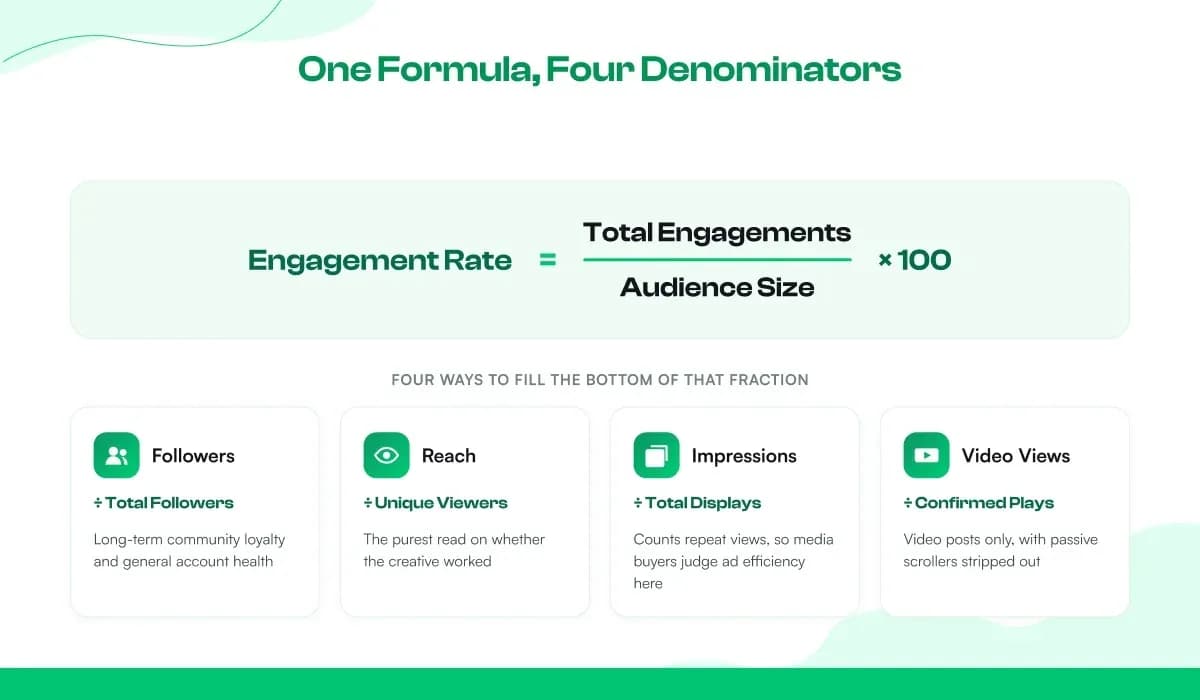
You can calculate your score using a simple social media engagement rate formula: add up all interactions, divide that sum by your chosen audience number, and multiply by 100.
The core math equation is simple:
Engagement Rate = Total Engagements ÷ Audience Size × 100
The trick is deciding which audience size to put at the bottom of the fraction. Popular social media management software tools do not agree on a single method. Some tools default to total followers, while others default to total post views. Knowing how these tools calculate your score keeps you from panicking over confusing data.
Follower Based Engagement Rate
This metric focuses on your total subscriber count to measure overall brand affinity.
Formula: Total Engagements ÷ Total Followers × 100
This formula measures how active your existing audience is over time. It shows what percentage of your total fanbase actually interacts with your posts. Use this formula to track long term community loyalty and general account health.
Reach Based Engagement Rate
This metric relies on unique viewer counts to measure true creative appeal.
Formula: Total Engagements ÷ Reach × 100
This metric measures post quality among actual viewers. Reach filters out inactive followers who never saw the post. It gives you the purest look at whether your creative content successfully convinced viewers to act.
Impression Based Engagement Rate
This metric factors in repeat views by comparing interactions against total content displays.
Formula: Total Engagements ÷ Impressions × 100
This formula measures interactions against total content displays. Since one person can view a post three times, impressions are always higher than reach. Media buyers use this math to judge paid ad efficiency.
If the difference between the two still feels confusing, our guide on how Twitter views work breaks down impressions versus engagement clearly.
View Based Engagement Rate
This metric isolates video interactions by comparing actions against confirmed video plays.
Formula: Total Engagements ÷ Video Views × 100
This formula focuses exclusively on video posts. It measures user reactions against people who actually watched your video file. It eliminates passive feed scrollers from your performance score.
Mixing up these formulas leads to bad strategic decisions. Recognizing how these distinct math models work prepares you to judge your performance against industry benchmarks.
Is Your Engagement Rate Good Enough? Here Are the Benchmarks
If you are wondering what is a good social media engagement rate, typical benchmarks sit between 0.03% and 3.73% depending on your platform.
Page size is a huge factor. Small accounts enjoy much higher engagement percentages. Their small crowd pauses and talks more often. Once a page grows very large, your percentage drops even if your overall view count rises.
Two main research reports give us baseline targets. Socialinsider analyzed 70 million posts. They logged TikTok at 3.73%, Instagram at 0.48%, Facebook at 0.15%, and X at 0.12%.
The Quid 2026 report sampled 150 brands per sector. They logged TikTok at 2.01%, Instagram at 0.30%, X at 0.03%, and YouTube at 0.21%.
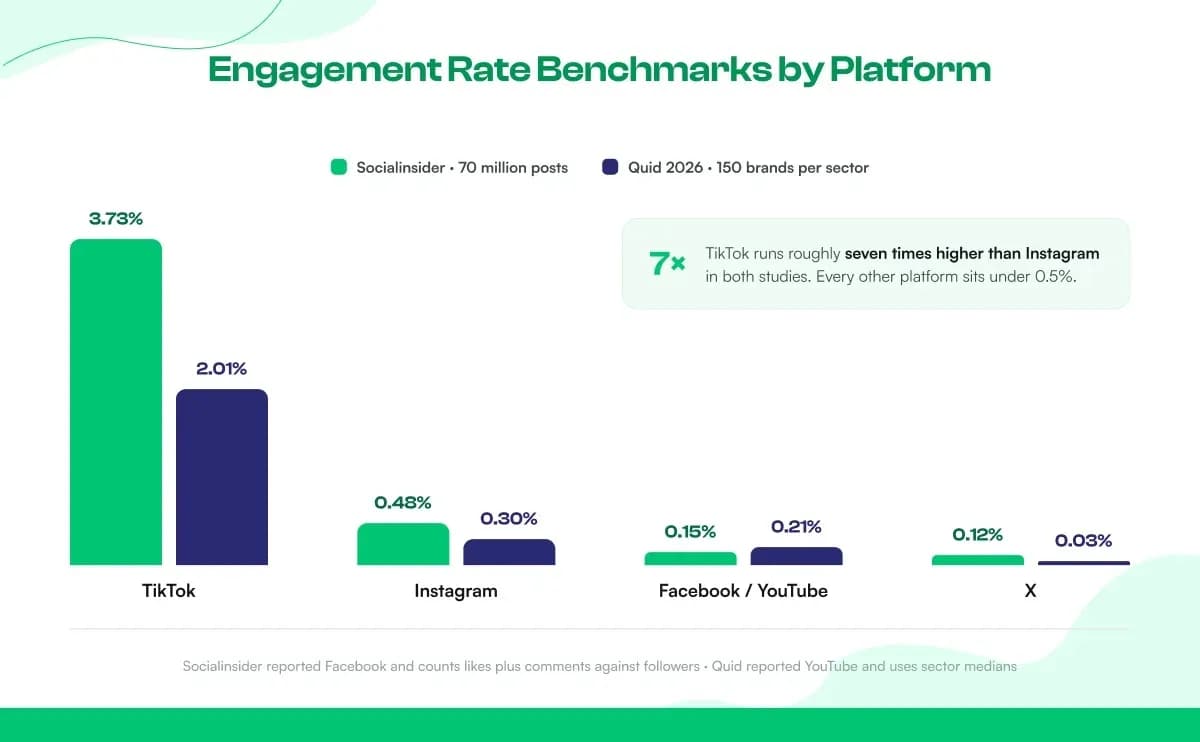
The gap comes down to research methods. Socialinsider totals likes plus comments against follower lists. Quid looks at sector medians. Always compare your numbers against accounts of similar size in your niche using the same formula.
The Key Factors That Control Your Engagement
Social media engagement relies on four primary drivers. These drivers are format type, upload timing, algorithm testing, and viewer relevance. Mastering these elements allows you to predict post performance more accurately.
Content Format Choice
The layout of your post shapes how viewers respond. Different social media apps reward different content styles.
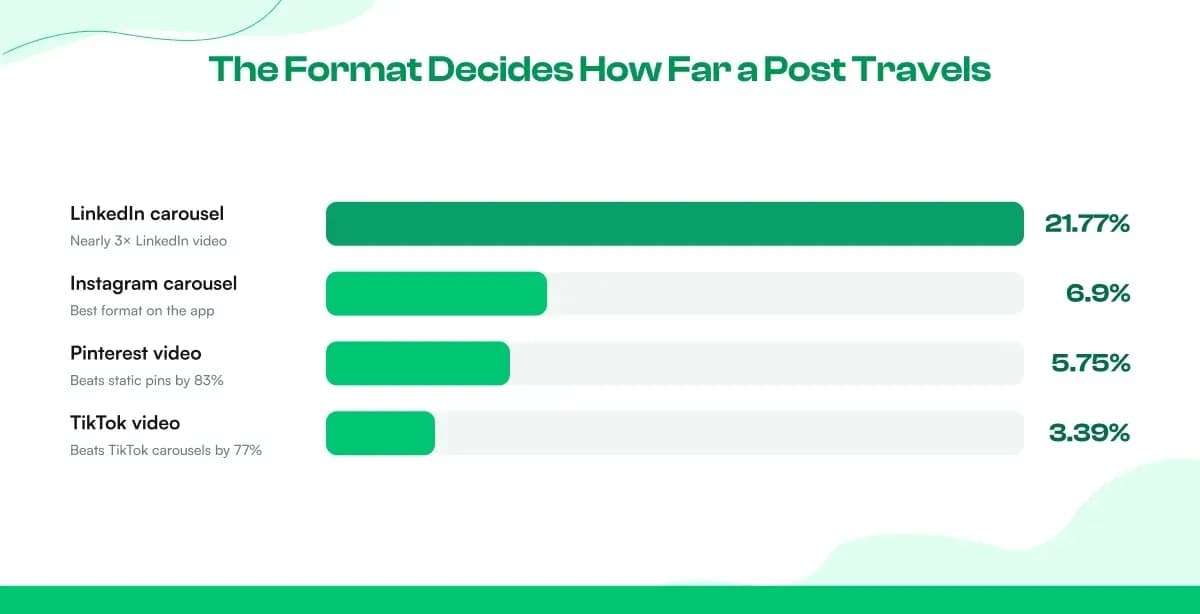
Buffer’s analysis covering 45 million posts highlights these platform differences. Instagram carousels earned a 6.9% median engagement rate. On LinkedIn, carousels hit a 21.77% rate, outperforming LinkedIn video by nearly 3 times.
TikTok video proved superior on its own app with a 3.39% rate, beating TikTok carousels by 77%. Pinterest video achieved a 5.75% rate, beating static Pinterest images by 83%.
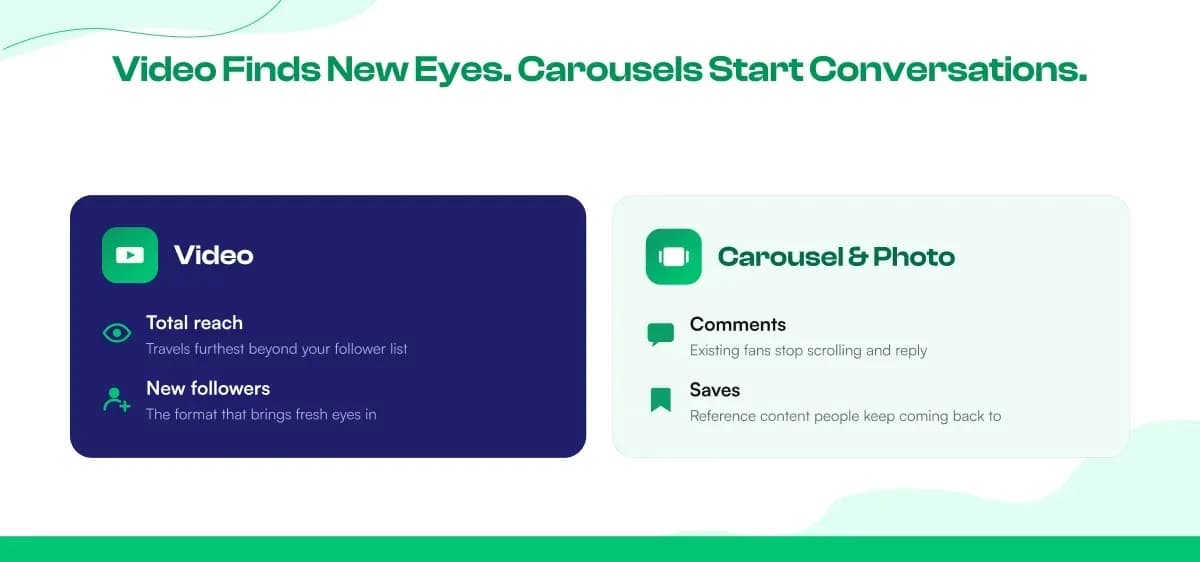
Videos excel at attracting fresh eyes and driving total reach. Carousels and photos excel at getting existing fans to leave comments and save posts.
Upload Timing
Posting during peak audience hours gives your content a quick push. Early reactions signal to the platform that your post contains valuable information.
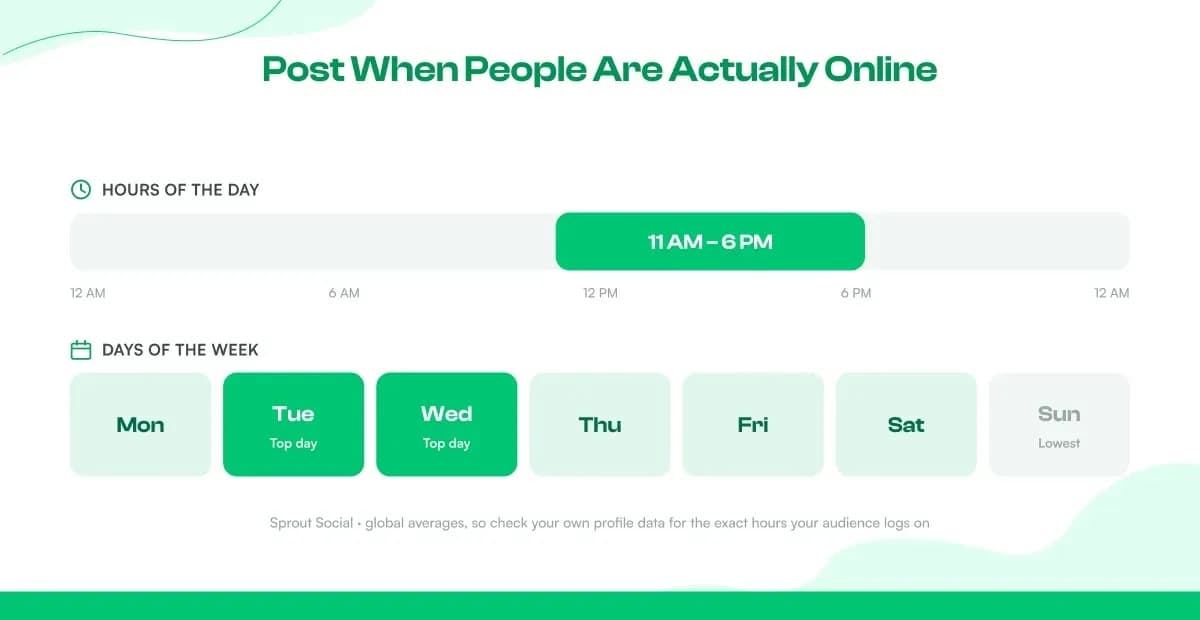
A Sprout Social study of 307,000 profiles and 2 billion interactions tracked global user habits. The data showed that hours between 11 am and 6 pm yield the highest engagement numbers. Tuesday and Wednesday rank as the top performing days, whereas Sunday shows the lowest activity.
For platform-specific timing, check our best time to post on TikTok guide.
Global averages provide a solid starting point. Checking your personal profile data shows the exact hours your fans log online.
Algorithmic Test Groups
Modern distribution systems run automated quality tests on every upload. A small sample of users sees your post first to gauge interest levels.
On TikTok, algorithms track total watch time during the initial test. If viewers watch 70% or more of your video, the platform rewards you with a larger audience wave. Immediate swipes kill post momentum right away.
Instagram monitors your existing followers during the first 1 or 2 hours. Strong early reactions prompt the algorithm to test your post on the Explore feed for non followers.
Audience Relevance
A post must speak directly to the needs of your target audience. Specific value triggers viewer action faster than general statements.
Matching your message to specific user interests matters more than post timing or format choice. Clear relevance ensures that viewers pause scrolling to leave a comment or share your post.
Proven Ways to Grow Your Social Media Engagement Fast
Learning how to increase social media engagement requires practical techniques that lower the effort needed for viewers to respond. Asking direct questions, replying to comments fast, and using interactive formats give your audience clear reasons to take action.
Ask Direct Questions in Your Captions
Ending your caption with a specific question gives readers a clear prompt to answer. Generic statements leave viewers wondering what to say, which causes them to keep scrolling.
Simple questions like "which option would you pick?" or "what worked best for you?" remove all guesswork. The reader does not need to invent a response. You hand them an easy starting point for a comment.
Reply Quickly to Your Comments
Replying to readers in your comment section creates active, visible conversations. It shows your audience that you value their time and signals to platform algorithms that your post drives genuine discussion.
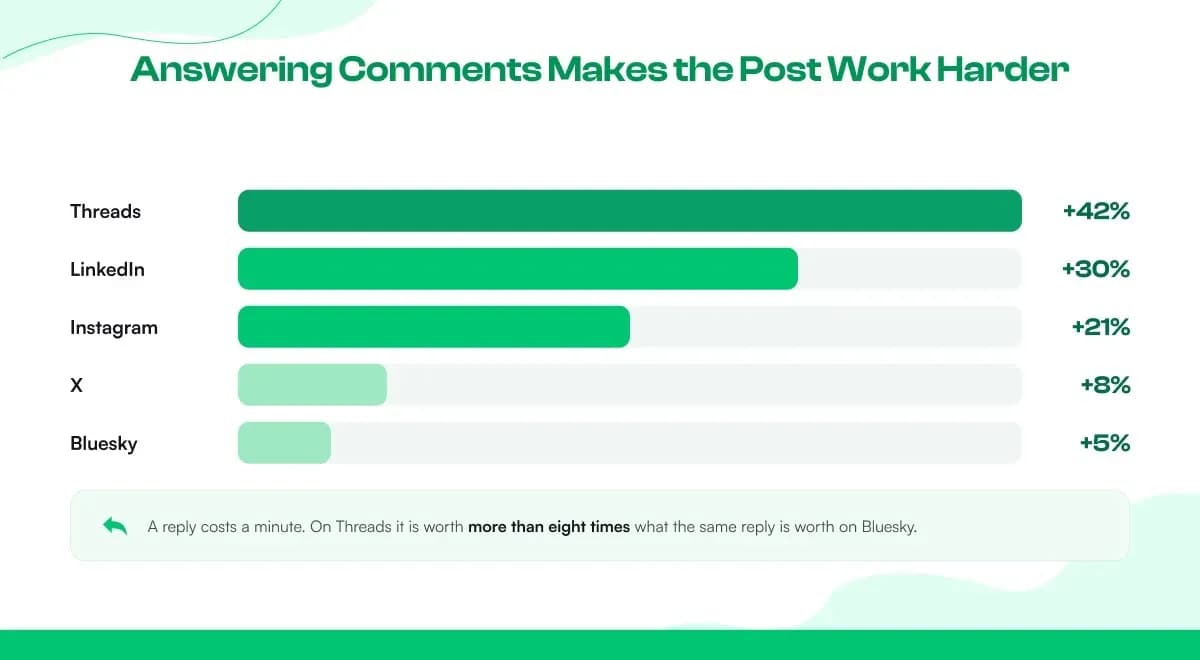
Buffer analyzed nearly 2 million posts across six major platforms to measure creator replies. Posts where creators responded to comments earned significantly higher engagement rates than posts left unanswered. Engagement jumped 5% on Bluesky, 8% on X, 21% on Instagram, 30% on LinkedIn, and 42% on Threads.
For a platform-specific guide, see our 25 proven ways to increase engagement on TikTok.
Use Interactive Formats Built for Tapping
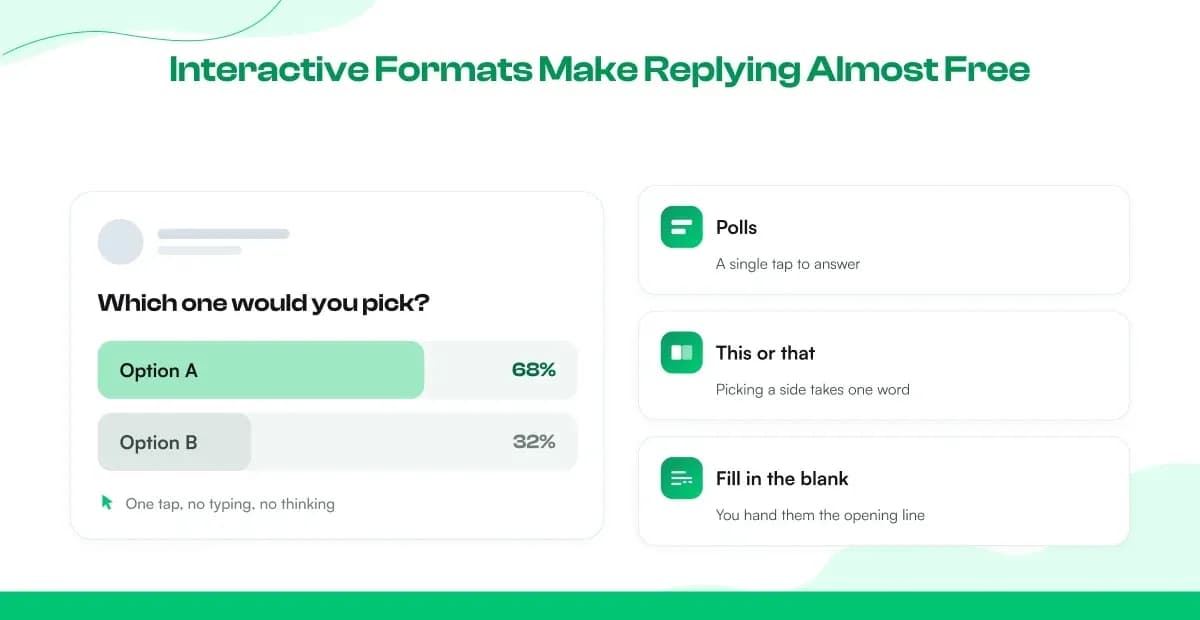
Interactive post types like polls, "this or that" choices, and fill in the blank prompts invite quick participation. These formats reduce the mental effort needed to engage.
Voting in a poll takes a single tap. Picking a side in a "this or that" post takes one word. These low friction choices encourage quiet scrollers to participate. Using these tools alongside your regular content mix keeps your feed fresh and interactive.
Real Examples of Content That Drives Social Media Engagements
Different social media actions stem from different user motivations. Understanding what drives each interaction allows you to design posts that prompt specific responses.
Quick Tap Content for Likes
Visually striking photos and relatable single sentence statements drive quick likes. This style of content asks almost nothing from the reader.
Viewers do not need to study the post or leave a detailed reply. They tap the heart button as a simple signal of agreement before moving on to the next item in their feed.
Conversational Content for Comments
Posts that present a mild debate or ask for personal recommendations generate rich comment threads. Prompts like "what is your favorite tool for this job" invite readers to join a public discussion.
People enjoy sharing their opinions when invited directly. Giving your audience a clear topic eliminates friction and encourages users to post written replies.
High Utility Content for Shares
Actionable tips, clever memes, and industry cheat sheets encourage users to repost your content. Viewers share posts that help their friends or showcase their personal taste.
A share extends your reach to brand new audiences. Creating content that reflects well on the person sharing it ensures maximum organic distribution across social networks.
Educational Content for Saves
Detailed infographics, recipe steps, and multi slide tutorials receive high save rates. Posts structured as step-by-step guides offer long term value that viewers want to keep.
Users save posts so they can access the information during future projects. Making your post easy to reference later guarantees a steady stream of private bookmarks.
Curiosity Content for Clicks
Posts that outline a problem and promise a solution through a website link drive strong click rates. Summarizing three main points of an article while pointing to the full post encourages users to take action.
Delivering clear value in the initial post establishes credibility. Readers click your link because they trust that your external content will provide even more answers.
Understanding the real social media engagement examples helps you match your content layout to the exact metric you want to drive.
Critical Mistakes That Hurts Your Social Media Engagement
Avoid these common mistakes to keep your social media engagement strong. Certain habits quietly destroy viewer interaction and limit your reach across platforms.
Posting Only Promotional Content
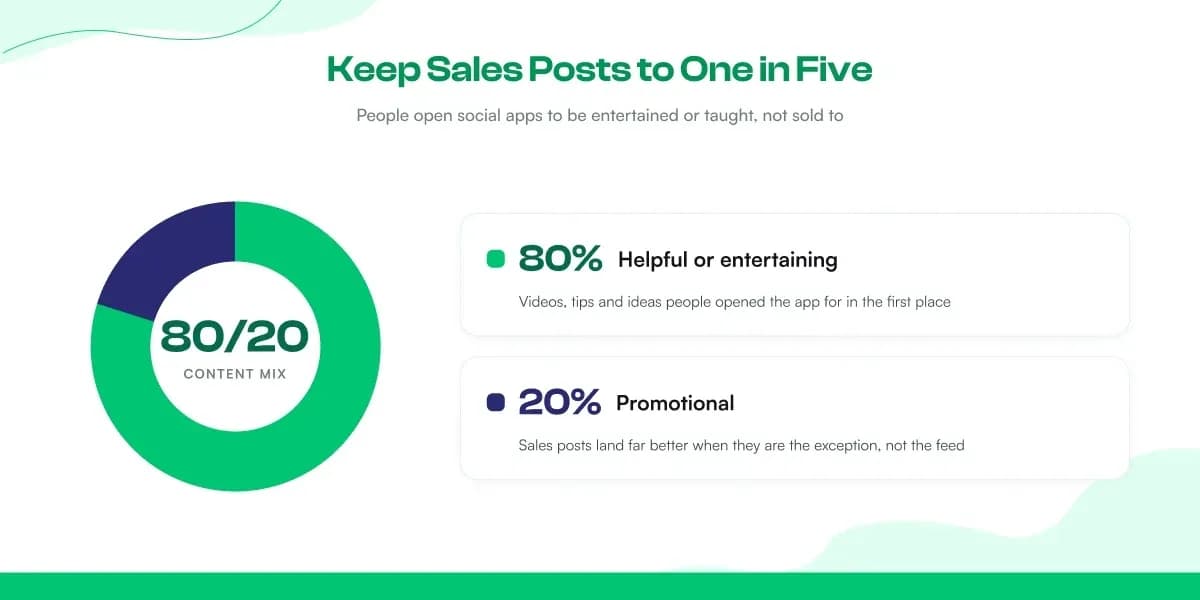
Treating your feed like a digital billboard destroys user interest. People open social apps to watch fun videos or learn new ideas. They do not want constant messages telling them to buy products.
Make promotional content the minority of your overall posts. Keep sales posts around 20% of your total schedule, while reserving 80% for helpful or entertaining topics. This approach keeps your audience engaged when sales offers appear.
Ignoring Your Comment Section
Walking away right after you publish a post hurts your total reach. Unanswered comments make your page feel abandoned and cold.
Talking with your viewers in the comments keeps your post active longer. Algorithms reward active discussion threads by showing your post to new feeds.
Following an Unpredictable Posting Schedule
Random posting gaps confuse both human viewers and algorithm systems. When you post heavily and then vanish for weeks, your audience loses interest in your account.
A Buffer study of 100,000 accounts proved the value of routine uploads. Pages that posted weekly over six months generated 5 times more engagement per post than inconsistent pages. Even medium consistency delivered 4 times higher interaction rates. Maintaining a steady schedule builds strong habits for your fans.
Your Next Steps for Better Engagement
Big follower numbers mean nothing if people ignore your posts. Real social media engagement measures how deeply your community connects with your message.
Metrics like comments, saves, and shares show exactly what value you provide. You can use these clues to read your real performance accurately.
Choose a couple of practical strategies to use right now. Apply them today and watch how your audience responds.
Frequently Asked Questions
Is engagement rate more important than follower count when working with brands?
Can a post have high reach but still perform poorly overall?
Does every engagement action affect the algorithm equally?
How often should engagement rate be checked?
Is there one engagement rate every account should aim for?