



Green translucent 3D chat icons on a white background with a dotted grid pattern.Faint green chat and speech bubble icons on a light background with scattered dots.
Social Media

Social Media Addiction Statistics 2026: Global Data & US Trends

pencil green icon
Updated on: August 12, 2026
|
clock green icon
12 min read
Contents

Latest social media addiction statistics state that approximately 210 million people are addicted to them. Over 56% of the global population is connected through these platforms. They contributed to the economy and business growth for the past few years. 

But, conversely, they left negative impacts. Users often encounter clinical addiction, mass anxiety, and, in some of the worst cases, social isolation. This phenomenon is often framed through two lenses: the clinical paradigm and the maladaptive habit. 

Today, we will present all the major research and statistics on how these social media are affecting our very human traits. To ensure the highest level of accuracy, we handpicked peer-reviewed research from Google Scholar. 

Furthermore, we included government- and industry-directed surveys. The following data provides essential insights into social media-driven mental health impact. 

Want to grow without falling into the scroll trap? Socialplug's free tools help you post smarter, not longer.

Socialplug's Free Tools

Key Takeaways: Social Media Addiction Statistics

Researchers tracking social media addiction statistics worldwide have noted a global increase in compulsive scrolling habits. According to reports, social media addiction in adults is less severe than among youth. 

Key Takeaways: Social Media Addiction Statistics
  • 59% of adults admitted their mental health suffered due to social media.
  • 70% of people use social media before they sleep.
  • Social networks significantly trigger “dopamine drop”. It happens due to a lack of expected likes or engagement, fueling ADHD or restlessness.
  • "Facebook depression" increases reliance on substances for emotional regulation and coping.
  • Usually, people spend 151 minutes (2 hours and 31 minutes) on social media daily (Highest avg).

Social Media Addiction Statistics By Country

A closer look at social media addiction statistics by country reveals that nations with the highest smartphone penetration rates tend to suffer the most. 
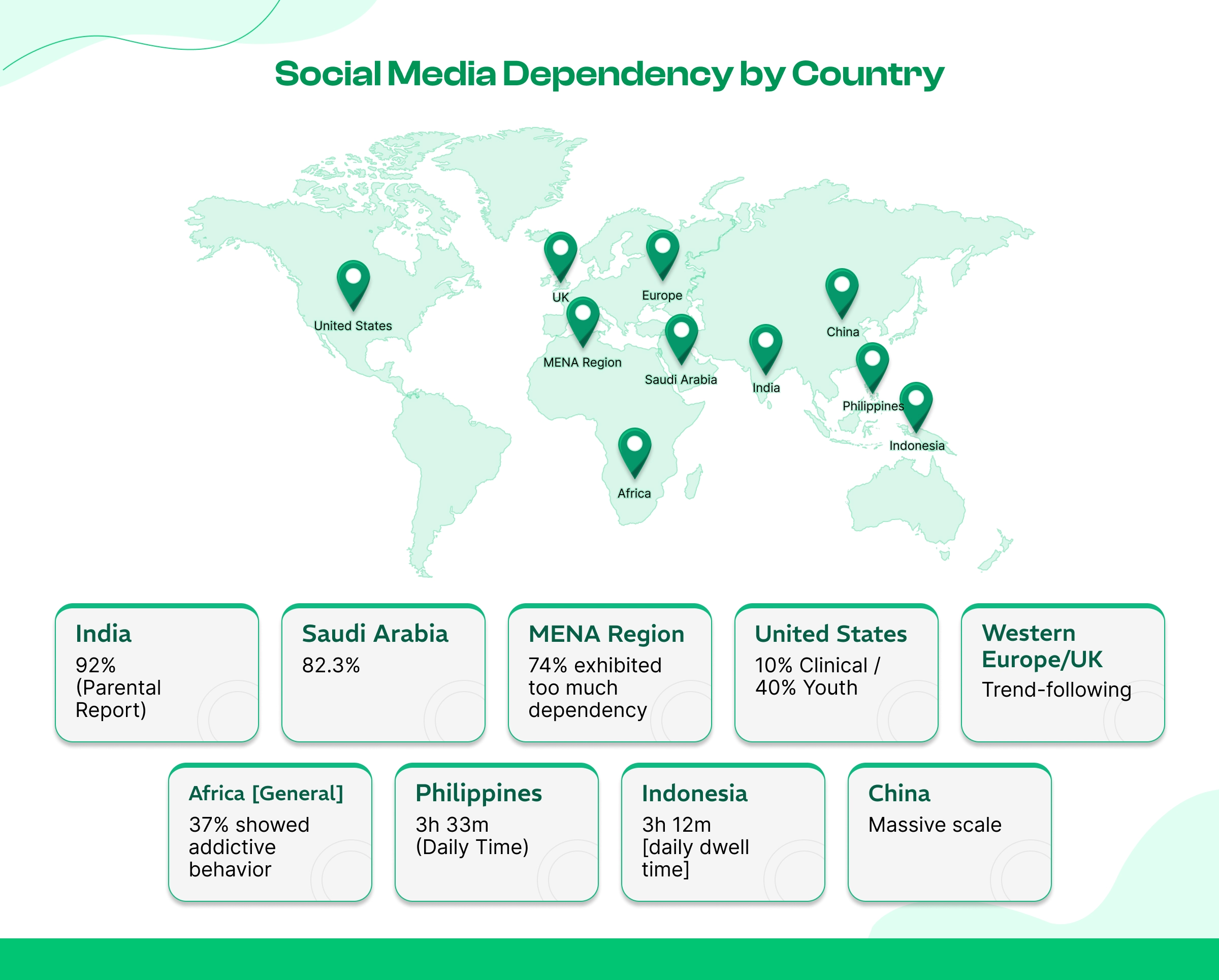
  • Around 25% of users worldwide, at some point, felt addicted to social media.
  • A cross-cultural MENA study found that problematic smartphone use peaked in Jordan at 59.8%, followed by Saudi Arabia (27.2%), Sudan (17.3%), and Yemen at just 8.6%.
  • Nigeria has the highest daily usage (4 hours and 49 minutes), followed by the Philippines (4 hours and 1 minute).
  • Japan has the lowest daily usage (just 46 minutes).
  • The African-American ethnic group represents the lowest social media use tendency in the US.
Social Media Addiction Statistics By Country
CountryAverage Time Spent on Social Media
Nigeria4 hours and 49 minutes
Philippines4 hours and 01 minutes
South Africa3 hours and 56 minutes
Brazil3 hours and 47 minutes
Colombia3 hours and 41 minutes
Ghana3 hours and 32 minutes
Mexico3 hours and 26 minutes
Kenya3 hours and 25 minutes
Argentina3 hours and 32 minutes
Indonesia3 hours and 19 minutes

Source: Resourcera

Do you know? Pinterest is one of the most popular visual search engines and discovery platforms. Here’s some interesting facts about Pinterest!

Social Media Addiction by Platform (Gender Based)

Social Media NetworkFemale User (%)Male User (%)
Snapchat60%40%
Pinterest78%22.00%
Instagram5743
Facebook4456
X/Twitter32%68.00%
LinkedIn49%51.00%
TikTok59%41%
YouTube45%55%

Source: Search Logistics

Platforms like Snapchat that lean on streaks and disappearing content tend to reinforce daily compulsive checking more than static feeds do, which helps explain the female usage skew in the table above. 

Social Media Addiction Statistics By Teens Usage

Recent studies outlining social media addiction statistics, teens face a sharp rise in daily screen time. 

  • YouTube leads the general U.S. population. The platform reaches 81% of all Americans, heavily outpacing Facebook (69%) and Instagram (40%).
  • Teen YouTube adoption is nearly universal. 95% of teens use this video platform.
  • TikTok secures the second spot for youth. 66% of teenagers are active on the platform.
  • Instagram edges out Snapchat among teens. Usage stands strictly at 63% for Instagram and 59% for Snapchat.
  • Mid-tier platforms capture a quarter or less of teens. Twitter sees a 23% usage rate, closely followed by Twitch at 20%.
  • Niche messaging and forums represent the lowest adoption. Teen usage drops to 17% for WhatsApp, 14% for Reddit, and bottoms out at 5% for Tumblr.
Platform% of teens using them
YouTube95%
TikTok66%
Instagram62%
Snapchat59%
Twitter23%
Twitch20%
WhatsApp17%
Reddit14%
Tumblr5%

Want to grow without falling into the scroll trap? Socialplug's free tools help you post smarter, not longer.

Socialplug's Free Tools

Social Media Addiction Statistics by Age

When analyzing social media addiction statistics by age, younger demographics predictably show much higher rates of compulsive use.
Social Media Addiction Statistics by Age

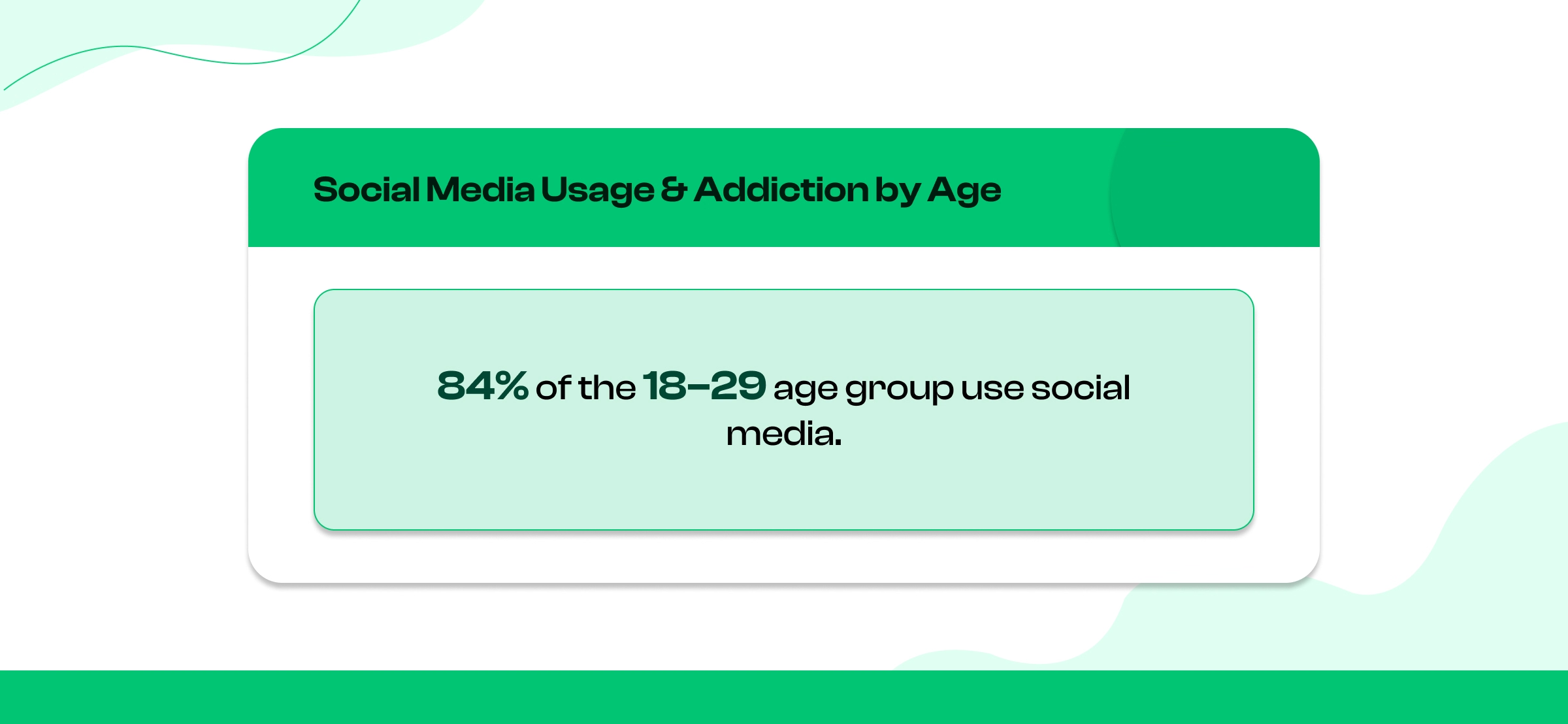
84% of the 18–29 age group use social media. Social media addiction statistics for teens have turned into a contagious, habitual pandemic. Experts are trying to assist people in overcoming such unproductive behavior patterns. 
Social Media Addiction Statistics by Age
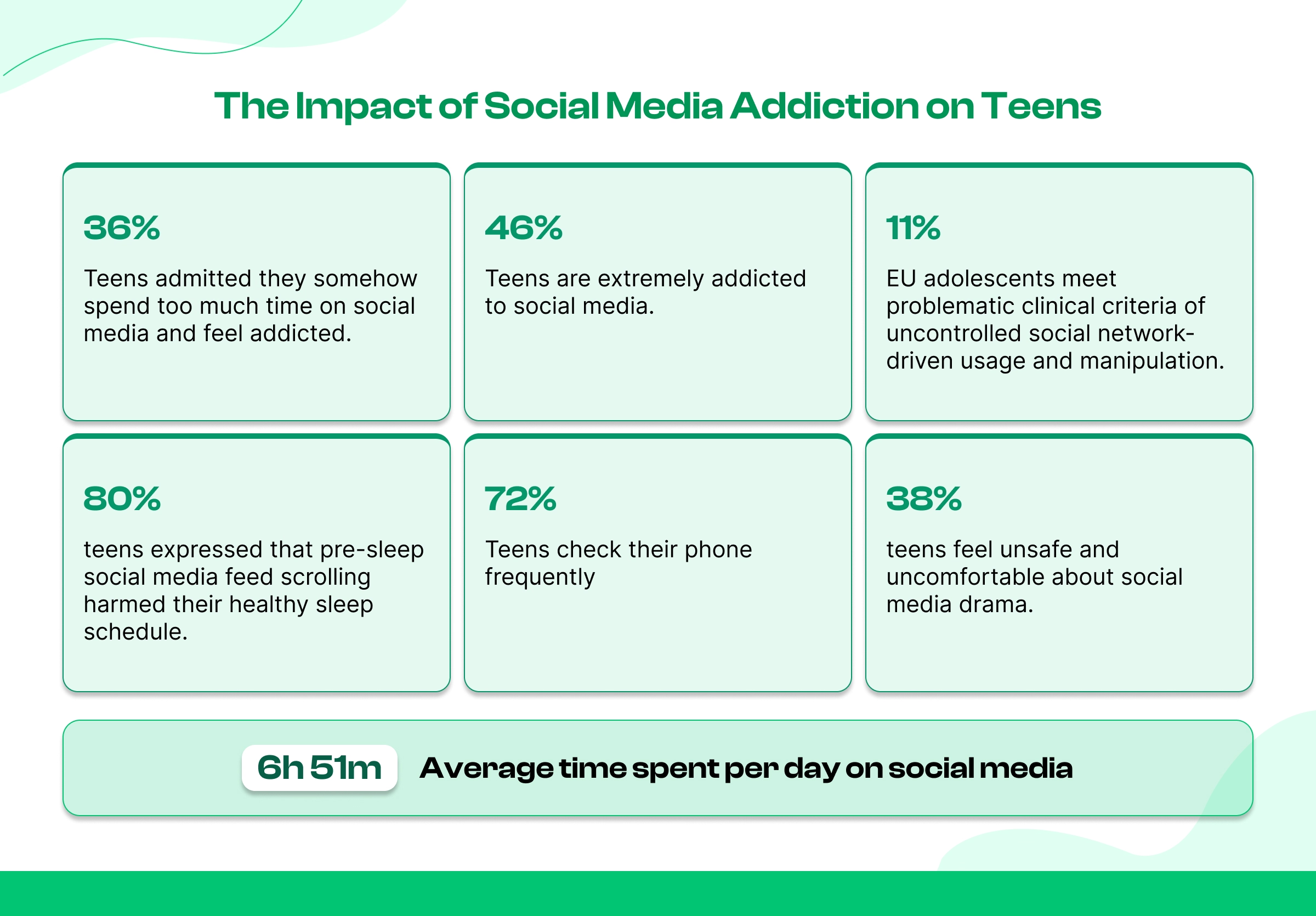
  • 36% of teens admitted they somehow spend too much time on social media and feel addicted.
  • 46% of teens are extremely addicted to social media.
  • Across the EU region, 11% of adolescents meet problematic clinical criteria of uncontrolled social network-driven usage and manipulation.
  • On average, a teen spends 6 hours and 51 minutes (6.85) hours per day on social sites.
  • Approximately 72% of teens displayed high-frequency phone checking.
  • Meanwhile, 38% of teens feel unsafe and uncomfortable about social media drama. They somewhat feel controlled by social media, as they are somehow bound to use these apps.

Social Media Addiction by Gender

Social Media Addiction by Gender

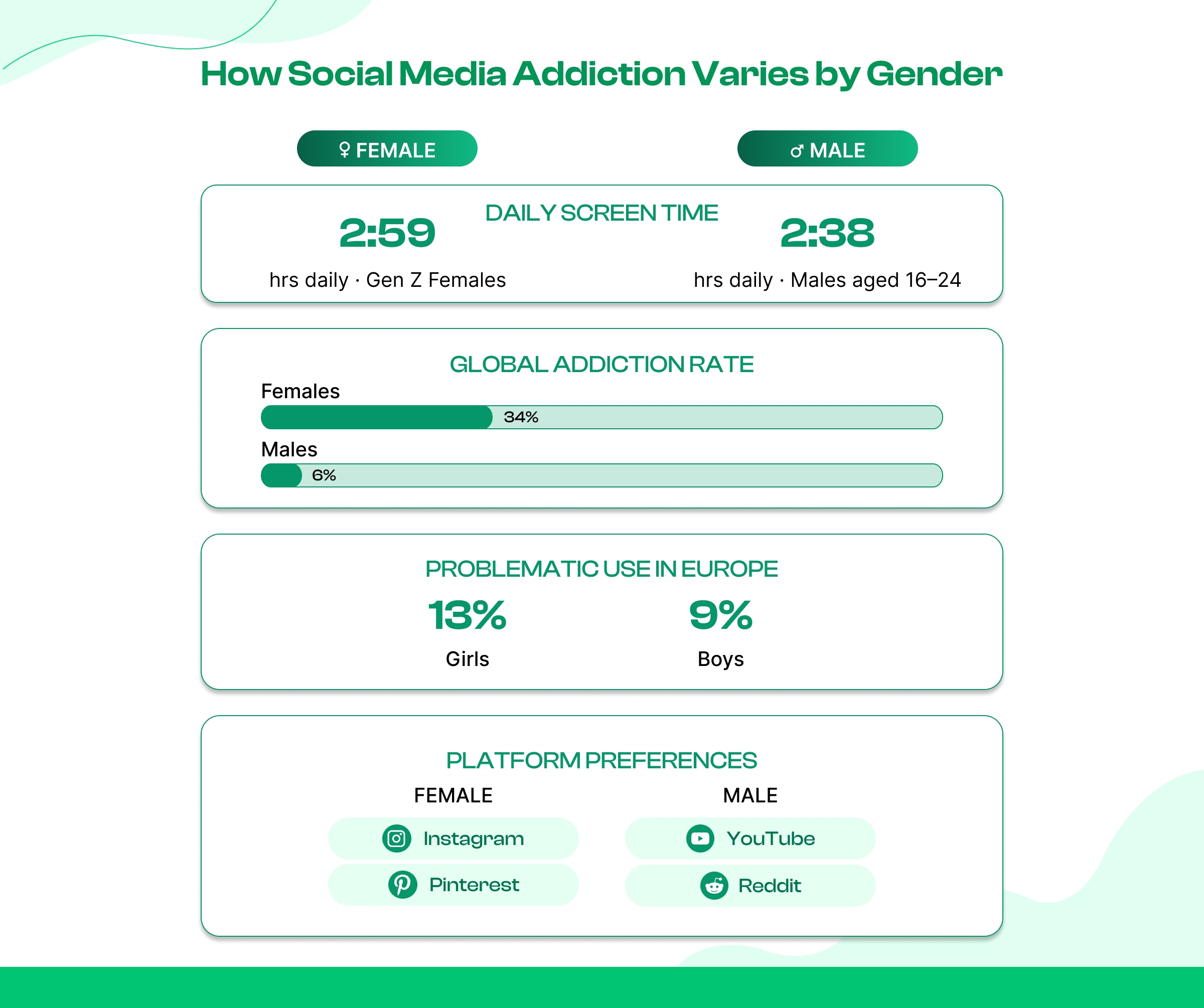
At a glance, gender-based overviews indicate females are more vulnerable even in the digital landscape. Cyberbullying, body image insecurities, and depression affect them more than boys. 

  • Globally 32% of women are addicted to social media compared to only 6% of men.
  • In the United States 45% of women admit to some level of addiction compared to 33% of men.
  • Statista reports that 11% of women and 7% of men admit they are undoubtedly addicted to social media.
  • Women experience higher addiction rates due to a strong focus on validation and social connection, particularly on visual platforms like Instagram.
  • Younger women aged 18 to 34 use platforms for relationship building while older women aged 35 to 50 focus on staying connected.

Source: Addiction Help

Social Media Addiction by Region

RegionFemale UsersMale Users
North America51%49%
South America50%50%
Western Europe50%50%
Southern Africa45%55%
Southern Asia34%66%
South Eastern Asia53%47%
Oceania50%50%

Source: Backlinko

Social Media Addiction Symptoms 

Recognizing early social media addiction symptoms like feeling anxious when offline can help people scale back their usage before it worsens. Often, you may have experienced perceived vibration or heard this phenomenon among your peers. This is another firsthand side effect. Experts address it as phantom vibration syndrome.
Social Media Addiction Symptoms 

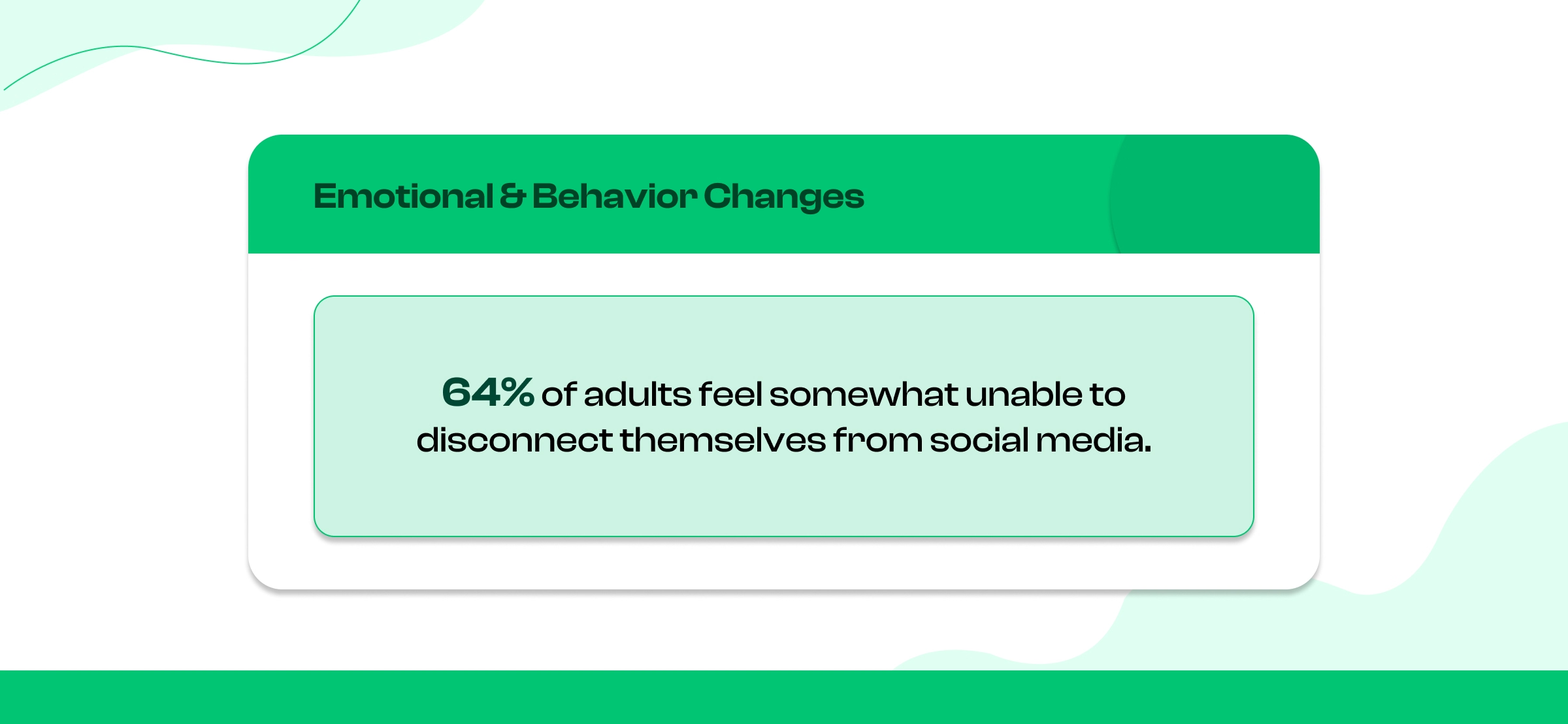
64% of adults feel somewhat unable to disconnect themselves from social media. This is a clear signal that poor social media attachment can intensely influence regular lifestyles and our daily tasks. 

Here are the symptoms for social media addiction:

  • Constantly thinking about social media or planning when to use it next
  • Feeling strong urges or cravings to check social media platforms more frequently
  • Spending an excessive amount of time actively using social media sites
  • Compulsively checking social media accounts throughout the day
  • Using social media as a primary way to distract from stress or personal problems
  • Making failed attempts to cut down or limit social media use
  • Experiencing anxiety or restlessness when unable to access social media
  • Neglecting important activities and obligations because of social media use
  • Facing negative consequences such as impairments in relationships, work, or school

Source: WHO, Psychiatry Online

Effects of Social Media Addiction 

Sleep deprivation and chronic anxiety are two of the most commonly documented social media addiction effects.It can lead to chronic activation of the HPA (Hypothalamic Pituitary Adrenal) and increased cortisol levels. 

  • Globally 33% of users who spend more than 3 hours daily on social media report feeling inadequate or missing out compared to 20% of light users.
  • An NCBI study revealed that 36.9% of social media users exhibit signs of addiction.
  • Physical side effects of social media addiction include eye strain at 38.4% and neck pain at 30.7%.
  • Behavioral and psychological impacts show that 26.1% of addicts experience sleep disturbances while 25.5% experience anger.
  • Roughly 10.1% of social media addicts engage in unhealthy behaviors such as smoking, drinking, and using chewable tobacco.
  • Roughly 1 in 8 Facebook users report that the platform negatively impacts their work, sleep, or parenting.

Source: NIH, Business Insider, Lululemon

Social Media Addiction and Effects on Sleep

  • 93% of Gen Z admit to losing sleep because they stay up past their intended bedtime to use social media.
  • 80% experience this social media induced sleep loss at least once a week.
  • 59.9% of highly exposed teens experience worse sleep outcomes in tandem with their mental health symptoms.
  • A 30 minute daily limit for just two weeks significantly improves sleep quality and mental health metrics.

Workplace Productivity Loss

Workplace Productivity Loss

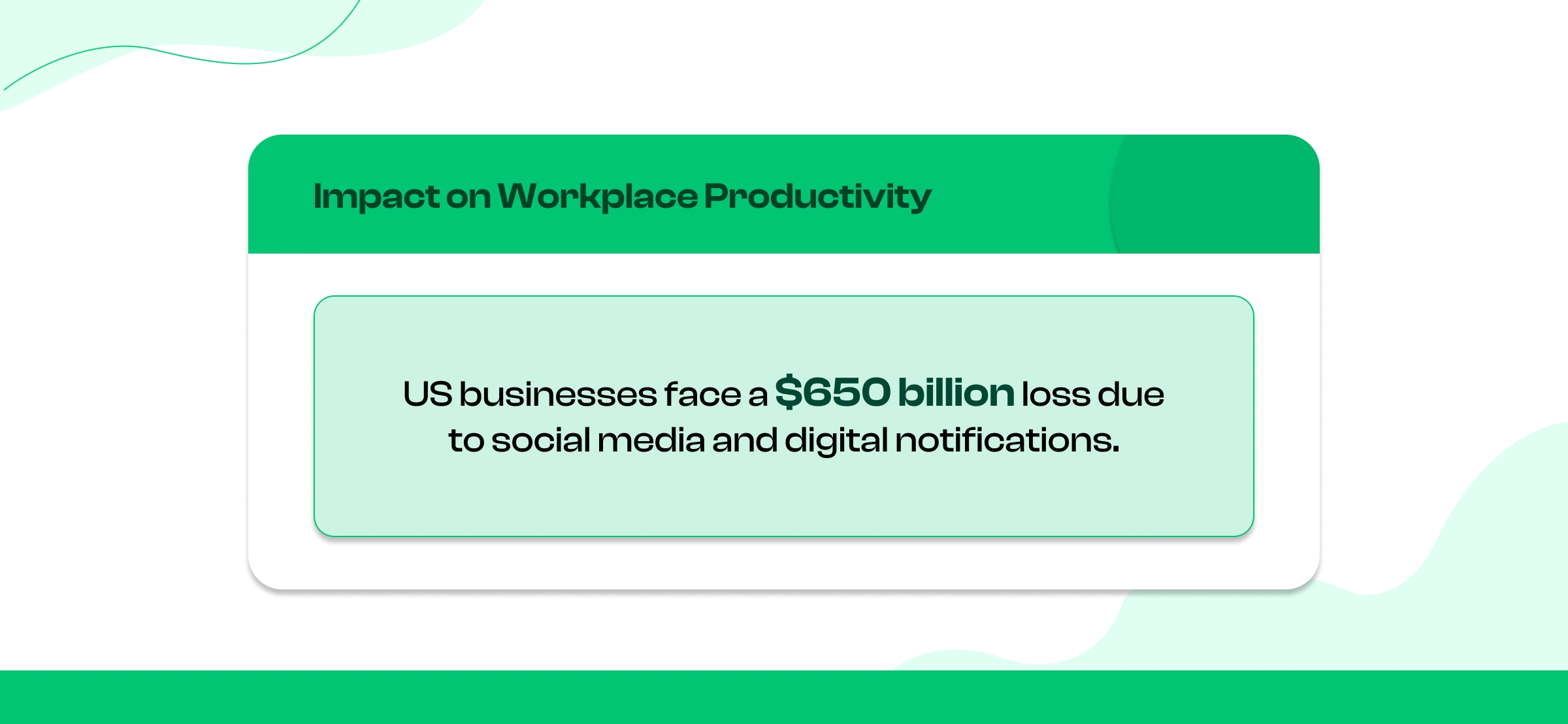
Can social media also cause a drop in employee productivity? The answer is, yes! Annually, US businesses face a $650 billion loss due to social media and digital notifications.

  • Over 64% of all employees typically visit unnecessary social media and e-commerce websites. These sites are not even related to their work. None of these visits helped them to upskill, nor were they related to their task or their workplace.
  • Another investigation found that social media notifications interrupted employees once every 11 minutes.
  • Social media interruptions increase the likelihood of human error by 12%.

Why Did Social Media Use Increase in the Office? 

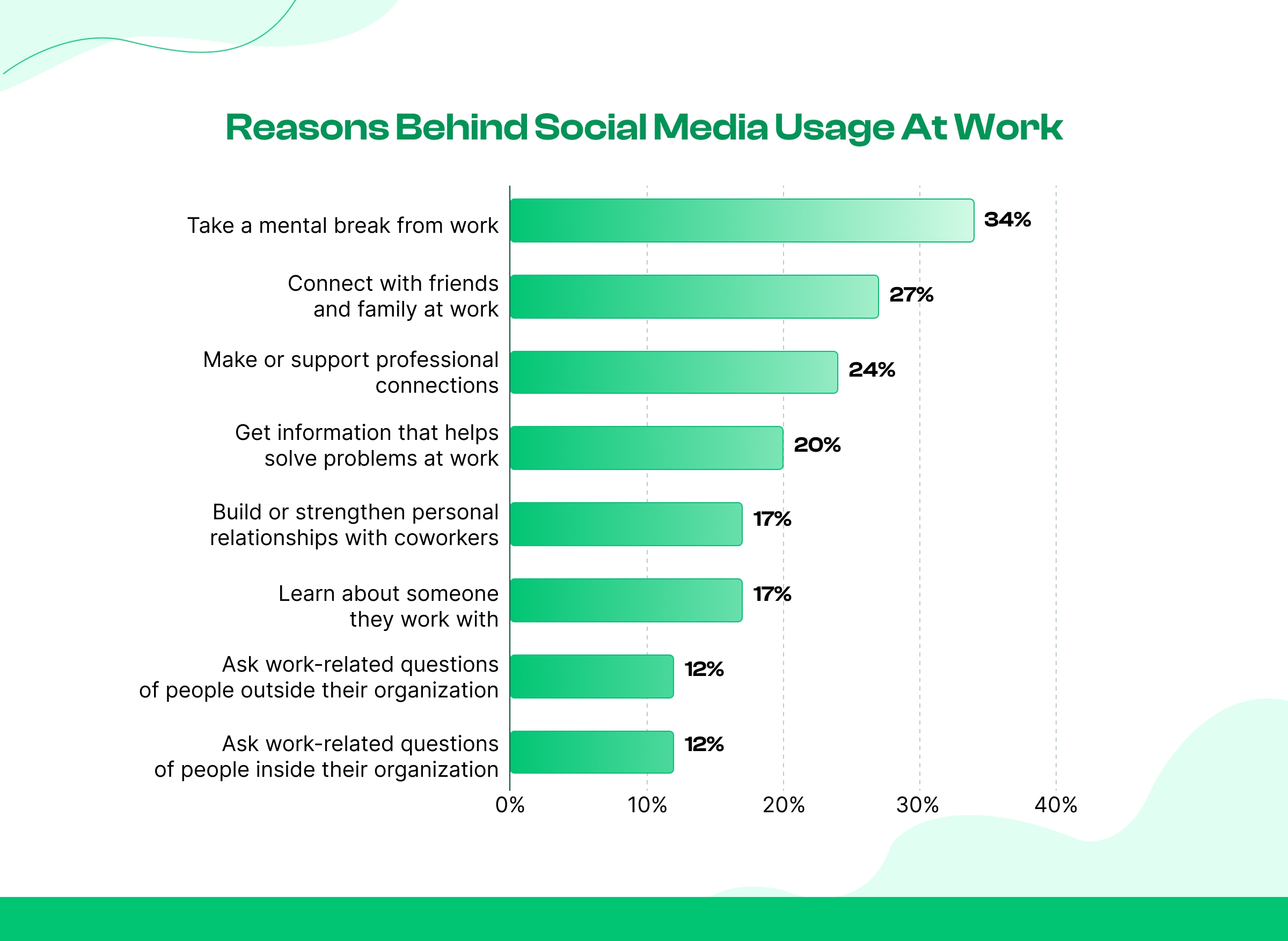
Researchers took the initiative to find the root cause of this misuse or distraction. It displayed 34% enjoying using social media for a mental break or to pass a tea break. Only 12% were looking for work or task-related solutions. Here are the causes of social media addiction in detail:
Reasons Behind Social Media Usage At Work

[Image credit: cropink.com]

Economic and Productivity Loss Due To Social Media Overuse

A recent survey highlighted 47% of workers use social media during working hours. Studies even found that workers spend 2.35 hours daily on social media.  Causing a $28 billion annual loss. It clearly shows how online distractions drain company resources.

The effect also affects the labor industries. For some logistics and, likewise, businesses, problematic smartphone and social media use was found to cause a 12.73% decrease in gross value added (GVA).

On the flip side, this misuse is also hampering employees' personal growth. Recent research suggests that it takes 23 minutes to return to full focus after a single interruption.
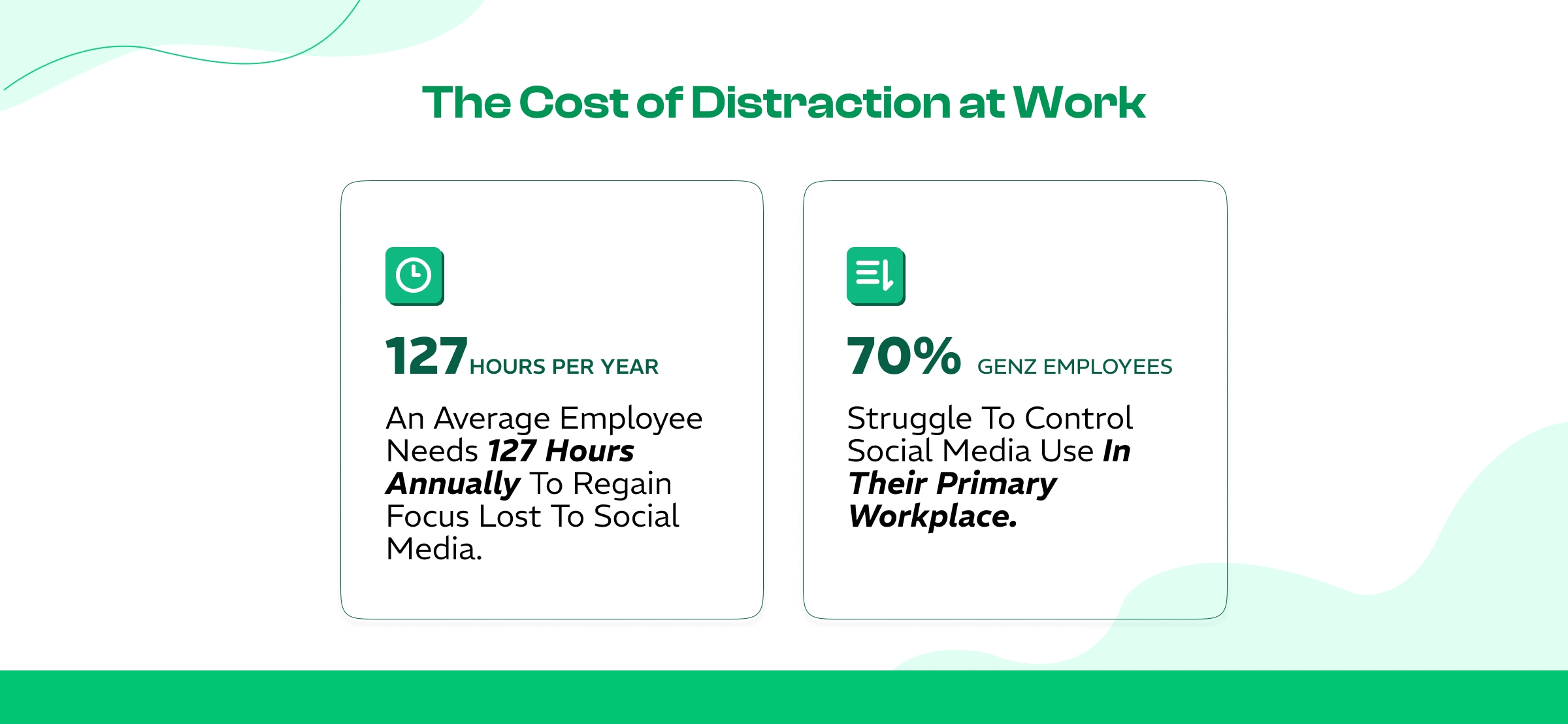
The Cost of Distraction at Work

To regain focus from social media addiction, an average employee needs to spend 127 hours per year. 70% of Gen Z employees struggle to encounter social media use in their primary workplace.

Relationship & Social Effects

The relation between social media and human interaction is now gaining importance in academia, too. For the past half-decade, multiple studies have been dedicated to trying to observe its impact on social communication and human connectivity.

Relationship & Social Effects of Social Media Addiction
  • In a test of 2,661 adults, 5%-11% of them lacked interpersonal competence.
  • 22% of participants exhibited shyness, which was closely related to social media dependency.
  • Social media harassment cases have increased by 40% since 2020, a trend that shows up clearly in Reddit threads dedicated to digital wellbeing.
  • Social media addiction can form perceived and objective social isolation. This longitudinal study was run on roughly 2000 adults in Denmark. The findings predicted an elevated risk of loneliness.
  • In some cases, increased online interaction may lead to “neglecting“ feelings among partners.
  • In-person interaction is more effective and impactful in maintaining healthy ties among couples. For less digitally dependent individuals, continuous online communication can lead them to feel lonelier.
  • One of the most recent studies indicated that social media actively aggravates strained social relationships.
  • Some users show early signs of social withdrawal from real-life activities.

Source: DergiPark, JMIR

Overall Impacts of Social Media Addiction

  • The 2023 U.S. Surgeon General's advisory concluded that the country cannot officially declare social media "sufficiently safe" for children and adolescents.
  • Social media adoption is massive; nearly half of younger children have accounts, and up to 95% of older youth are active on at least one platform.
  • Roughly 1 in 4 heavy-use teens experienced mental health challenges in a two-week period, with 27.1% reporting anxiety symptoms and 25.9% reporting depression symptoms.
  • For teens with less screen exposure, those rates dropped significantly to 12.3% for anxiety and 9.5% for depression.
  • Teens logging 4 or more hours a day face roughly double the odds compared to low-screen-time peers. Specifically, they have 2.07 times the odds for anxiety and 2.39 times the odds for depression.

Is Social Media Addiction Recognized as a Disorder?

The major global diagnostic manuals, like the American Psychiatric Association or the WHO, do not formally recognize SMA as a clinical disorder yet. Primarily, behavioral experts are addressing it as problematic social media use

In the official diagnostic system, gambling disorders are included under the DSM-5-TR term. Gaming disorders are indexed under the ICD-11 category. Social media addiction has not yet been listed under any of these terms. 

However, if you search google scholar for papers on digital wellness, you will find extensive evidence showing how screen time degrades real-world bonds.

However, unofficially, researchers of the National Institutes of Health acknowledge it as a major public health concern in India. Its widespread, alarming impact has already led to recommendations to address it as a new clinical entity.

Ready to grow your following the smart way? Explore Socialplug's growth services and see real results today.

Socialplug's Growth Services

Frequently Asked Questions

Does switching your smartphone screen to grayscale actually reduce scrolling?

Yes, removing vibrant colors strips away the visual reward mechanisms of social apps, making infinite feeds significantly less stimulating to your brain.

How does "phubbing" specifically damage real-world relationships?

"Phubbing" (or phone-snubbing) directly degrades intimacy by signaling to your companion that digital notifications are more valuable than their active company.

Can standard Cognitive Behavioral Therapy (CBT) be used to treat digital dependency?

Yes, therapists frequently use CBT to help individuals recognize the underlying emotional triggers, like boredom or loneliness, that drive compulsive scrolling habits.

Is "doomscrolling" classified as a distinct type of social media addiction?

Doomscrolling is not a separate condition, but rather a compulsive symptom of addiction where users obsessively scroll through negative news as a maladaptive way to process anxiety.

Do workplace website blockers successfully eliminate social media distractions?

Not effectively, as network filters usually just force distracted employees to pivot away from desktop computers and onto their personal smartphones using cellular data.

Tasnim Abedeen Raju
About The Author

Tasnim Abedeen Raju

Tasnim is a content and digital marketer born in Dhaka, Bangladesh. For over thirteen years, Tasnim has worked as a freelancer for several social media marketing companies. He has acquired skill sets in copywriting, content marketing, SEO & social media marketing. He’s one of the founding members of SEOSkit, a very exciting search engine marketing startup. In his free time he likes to travel, read, and make failed attempts at music.
0 Comments

Sort by:
Relevance
SP
JB
Jack Bellingham

Great tips! I never realized how much engagement impacts growth more than just posting frequently. I've been focusing only on content, but now I see how interacting with my audience can make a difference. Time to step up my strategy!

NF
Nicholas Feyenoord

Super helpful article! I always thought Facebook Groups were just for discussions and never really considered them as a tool for growing followers. The idea of actively engaging and sharing valuable content in relevant groups makes so much sense. I'll definitely start participating more and see how it impacts my page. Thanks for the great advice!

Green circular sticker with a curled corner revealing the underside.

Subscribe to our newsletter

Thank you! Your submission has been received!
Oops! Something went wrong while submitting the form.
Share this article