










Once, social media was just used to be a place for close and like-minded people to connect. However, it has turned into a powerful force that shapes how people see themselves; sadly, often in harmful ways.
Research shows that over 60% of adolescents and young adults report feeling worse about their appearance after using social media. This is largely owed to constant exposure to idealized images and lifestyles. According to another study, heavy social media use leads to significantly higher risks of depression, anxiety, and body dissatisfaction, especially among young users.
Together, they shape unrealistic social media expectations that are often impossible to meet. As a result, unrealistic or impossible expectations keep being fueled on social media, which, in turn, keeps quietly harming mental health over time.
How Does Social Media Set Unrealistic Standards?
It’s a no-brainer that not everything you see on social media reflects real life. In many ways, social media creates unrealistic expectations.
The Role of Algorithms in Shaping Expectations
Social media algorithms are designed to prioritize content that brings in engagement, such as likes, shares, comments, and watch time.
According to research published in JMIR, algorithmic social media feeds tend to repeatedly surface idealized bodies, lifestyles, and different success narratives in life. This happens particularly to users who have engaged with similar content before, even briefly.
Over time, a feedback loop is created, where people get exposed to increasingly narrow definitions of beauty, success, and happiness. This way, social media platforms reinforce certain expectations that may feel normal but are statistically rare in real life. So, this mechanism directly explains how social media sets unrealistic standards.
Influencer Culture and Curated Lifestyles
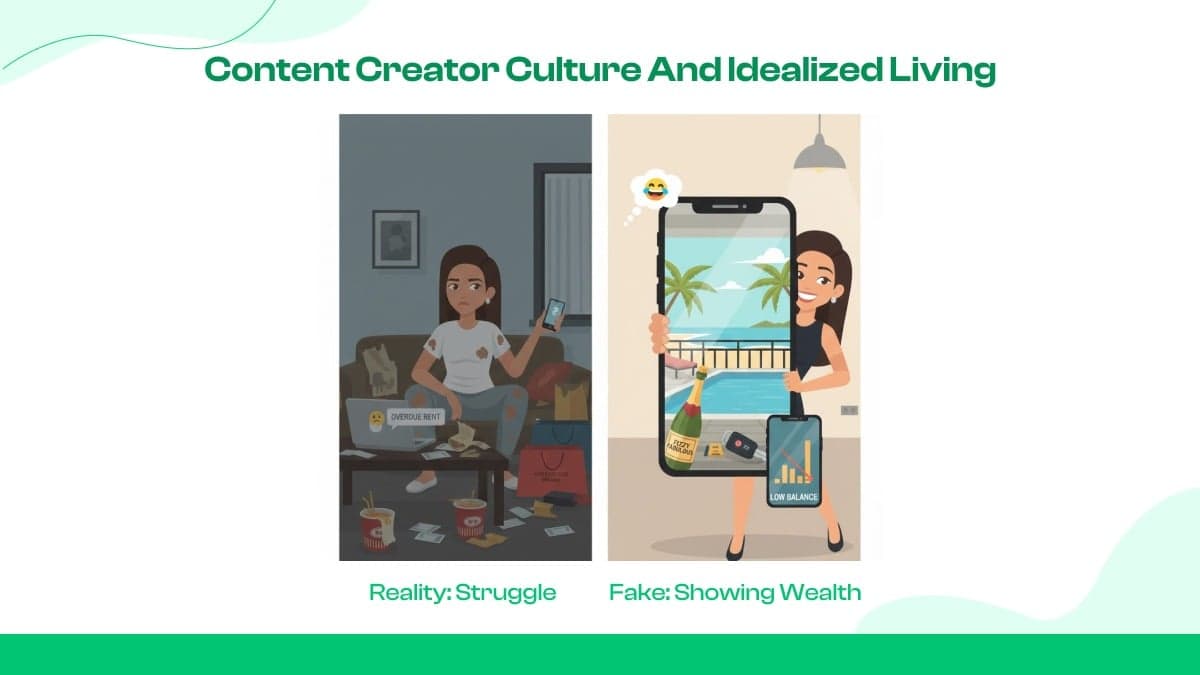
Influencers are massively to blame in this regard, as they very often set up unrealistic standards on social media. Studies show that from time to time, influencer content presents highly curated and selectively positive portrayals of life. And there are high possibilities that viewers may subconsciously treat them as attainable norms rather than marketing-driven content.
Since users are made to perceive influencers as “real people”, their content can feel more relatable, and as a result, it can feel more damaging than traditional advertising.
Such blurring of lines between authenticity and promotion significantly contributes to unrealistic expectations on social media, especially around wealth, productivity, relationships, and physical appearance.
Filters, Editing, and Visual Manipulation
Visual manipulation tools, such as filters, face-tuning apps, body reshaping, and lighting edits, have become standard across different social platforms.
A 2024 study in the Journal of Affective Disorders found strong correlations between frequent exposure to edited images and higher levels of body dissatisfaction, anxiety, and depressive symptoms.
These tools work to normalize faces and bodies that do not exist offline. This way, they distort reality and reinforce unrealistic expectations on social media. They shape expectations that are biologically and psychologically unsustainable.
The Impact of Social Media
Social media has become a regular and constant part of our day-to-day lives. Many of us spend even hours on social media, oftentimes just doomscrolling aimlessly. As a result, these social media platforms have a massive impact on our lives, unbeknownst to us. It particularly affects our self-esteem, how we see our own lives, and how we compare ourselves with others.
How Does Social Media Affect Self-Esteem?
Social media plays a powerful role in shaping how we evaluate ourselves. Constant exposure to highlight reels, such as milestones, achievements, and even filtered photos, causes us to compare rather than introspect.
Research published in JMIR shows that lower self-esteem and increased self-criticism can be highly associated with frequent social media use. It shows up particularly when users start comparing their appearance, status, or overall lives with others, which are often the unrealistic standards set by influencers.
Over time, these patterns start normalizing unrealistic standards on social media. It makes ordinary lives feel severely inadequate by comparison. This is a primary way in which social media sets unrealistic standards. And users don’t even realize how their social media expectations are being quietly reshaped.
Concealing the Real and the Sway of Influencers
Most social media content hides struggle, failure, and uncertainty. Influencers, in particular, tend to share carefully curated moments that emphasize success, beauty, and constant positivity.
According to the Annie E. Casey Foundation, this selective exposure can distort reality and increase feelings of inadequacy, particularly among younger users.
Furthermore, social media is home to "influencers", who are digital celebrities with substantial followings who can sway public opinion and consumer choices.
These influencers often employ digital enhancements, like filters and flattering lighting, to project an image of unattainable perfection.
Since influencer content often blurs the line between real life and advertising, followers may internalize these portrayals as normal benchmarks, further reinforcing unrealistic expectations on social media around lifestyle, productivity, and happiness.
Psychological Consequences
Such unrealistic expectations that you might get from frequent use of social media can have a myriad of psychological consequences.
Struggling with Self-Worth and Anxiety
If your self-worth becomes tied to likes, followers, or validation on social media, anxiety and a feeling of worthlessness can consume you. According to studies, heavy social media use is linked with heightened stress and constant self-monitoring, especially when posts fail to get expected engagement.
Distorted Body Image
Our perception of our own bodies can be heavily influenced by social media. The platform often showcases idealized, unrealistic body images. Celebrities and influencers frequently use filters and photo-editing tools to appear flawless, which can make us feel pressured to conform to these standards, even though they may not be biologically realistic. As a result, we may become dissatisfied with our own bodies.
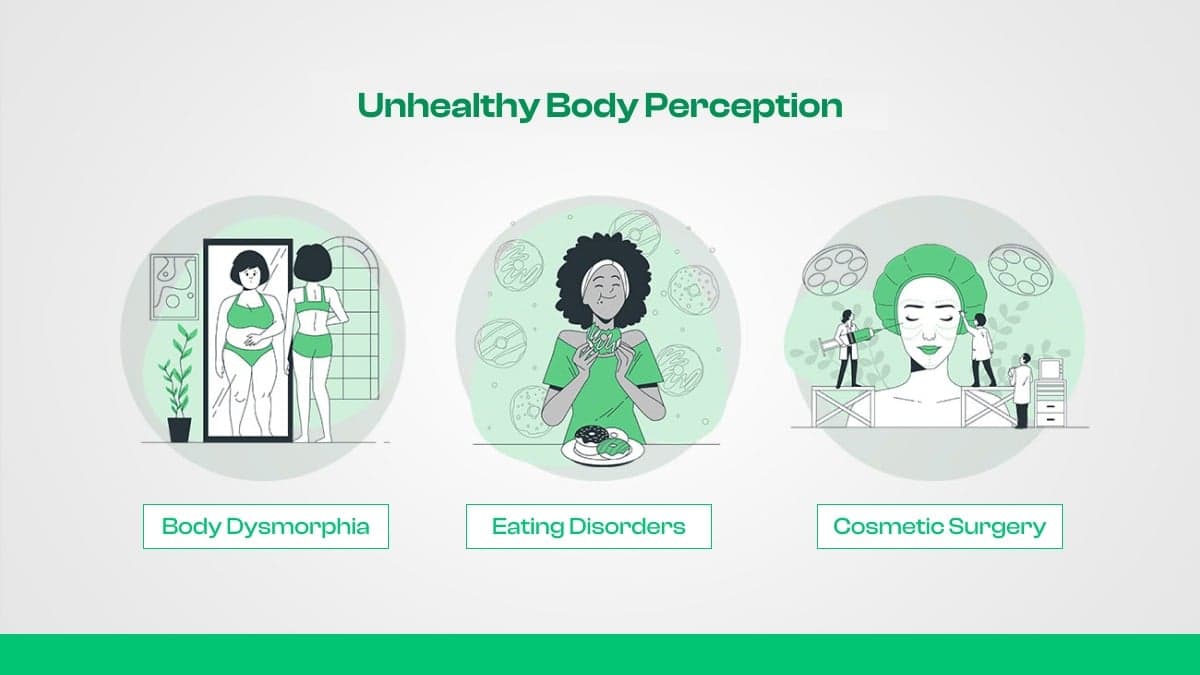
This dissatisfaction can lead to serious issues, such as:
Unrealistic Lifestyle Expectations
Influencers and even random people on social media often frame luxury, constant travel, and aesthetic routines as everyday life. These portrayals create pressure to “keep up” with such lifestyles, even when they’re not sustainable financially or emotionally.
Luxury, Travel, and the “Perfect Life”
High-end experiences are over-represented online, which skews perceptions of normal living standards and reinforces unrealistic standards.
Unrealistic Success and Career Expectations
On social media, you will just come across viral success stories and “overnight wins”, where they do not talk about years of effort and failure or the outright privilege they have. This can distort your expectations around career growth and financial stability, which can lead to frustration and burnout.
Unrealistic Relationship Expectations
Social media highlights idealized relationships, constant affection, no conflict, and perfect communication while hiding real-world challenges. This can create dissatisfaction with otherwise healthy relationships.
Anxiety, Depression, and Comparison Culture
Comparison culture on social media is one of the main drivers of mental distress. Multiple studies associate social comparison on social media with increased symptoms of anxiety and depression.
Fear of Missing Out (FOMO) Explained
“Fear of missing out”, or FOMO, emerges when users believe others are living better, more fun, and more fulfilling lives. Algorithmic feeds intensify this by prioritizing exciting or emotionally charged content, deepening feelings of exclusion and restlessness.
Impact on Teenagers and Young Adults
Teenagers and young adults are particularly vulnerable to the adverse effects of social media. Research shows that developing identities are more easily shaped by social media expectations. This increases the risks of low self-esteem, anxiety, and depressive symptoms during critical developmental years.
Why Unrealistic Expectations Are More Harmful Than They Seem?
You may feel like such unrealistic expectations will not really affect you or hamper your mental health, and you can keep surfing around the digital space without being mindful of the adverse effects. But you can never be too careful, and such unrealistic expectations can be more harmful than they seem.
Long-term Mental Health Consequences
The unrealistic expectations that grow from frequent social media use don’t just cause temporary dissatisfaction; they can quietly shape your mental health over time. When people get repeatedly exposed to idealized bodies, lifestyles, and success stories, the brain starts to internalize these standards as norms.
Studies have linked prolonged exposure to such social media content with chronic anxiety, depressive symptoms, burnout, and emotional numbness, especially when individuals feel they are consistently “falling behind.” Over the years, this can weaken a person’s resilience, lower the satisfaction level they feel about life, and normalize self-criticism as part of everyday thinking.
Identity, Self-Worth, and Validation Loops
Social media often ties identity to external online validation signals, such as likes, views, shares, and comments. It creates a feedback loop where self-worth depends on performance, not intrinsic value.
It can also happen that over time, people may start curating their personality, opinions, and even emotions to maximize the amount of approval they get from others on social media. And when validation dips, so does self-esteem.
This loop is particularly harmful, as it shifts identity formation from internal values to algorithm-driven rewards. It can cause one’s confidence to be fragile and conditional.
How Constant Comparison Changes Behavior
Constant comparison doesn’t just affect how people feel. It also changes how they act. If you start comparing your life to the unrealistic standards set by social media, you may overspend to match the perceived lifestyles, overwork to chase unrealistic success, or avoid opportunities due to fear of not measuring up.
At the same time, many people may withdraw socially or obsessively self-monitor their appearance and achievements. In this way, comparison culture can subtly reshape your decisions, priorities, and behavior. This often pulls people further away from what genuinely aligns with their needs and well-being.
Social Media Platforms
Social media platforms aren't just the culprits behind those unrealistic expectations; they also have the power to make things better. They can change the content we see and how we interact. They can also help us make smart and healthy choices.
Instagram vs Reality Examples
Instagram is built around visuals, and it makes the platform particularly powerful and misleading. On Instagram, influencers and even regular users share pictures taken with carefully chosen angles and lighting. Moreover, selective posting often presents a polished version of life that excludes stress, failure, and routine.
What looks like effortless beauty, constant travel, or overnight success is usually the result of planning, editing, and repetition. The difference between what’s posted and what’s real can reset expectations quietly, which may make ordinary lives feel inadequate by comparison.
TikTok Trends and Distorted Expectations
The fast-moving and flashy TikTok trends can amplify unrealistic ideas even faster. Videos on “Day in my life”, glow-ups, productivity routines, and instant-success stories often compress years of effort into seconds to turn them into eye-catching content. As trends reward dramatic and emotionally striking content, nuance gets lost.
This can create an illusion that rapid transformation, wealth, or popularity is normal. And that struggling means you’re not doing things right, or you’re not putting in your best effort.
The Magic and Responsibility of Algorithmic Feeds
Algorithmic feeds are like the secret sauce that decides what we see on social media. They use fancy math to figure out what we like and show it to us. This can be great because it gives us stuff we're interested in and keeps us coming back. But it can also be a bit tricky.
Sometimes, these algorithms make us see only what we already agree with. It's like we're in a bubble, and we don't hear different opinions. This can make us believe things that might not be true and make problems worse. Social media platforms need to make sure their algorithms are fair and clear. They also need to keep an eye on what's happening and remove any mean or bad stuff, like hate speech or lies.
Giving You the Power
But don’t be worried; it’s not all bad news. There is good news, too – users aren’t powerless. As a user of any social media platform, you can curate who you follow, mute triggering content, diversify your feed, and take necessary breaks whenever necessary. These can significantly reduce the negative impact.
You shouldn't feel like social media controls you. When you treat social media as a tool, not a mirror, you regain control over your expectations, attention, and mental space.
So, social media can be a force for good if they do things right and give you the power to control your own experience.
Strategies to Combat Unrealistic Expectations
While social media connects us to people, information, and entertainment, it can also make us feel like we don't measure up.
The good news is that we can take control and make our social media experience more positive. Here are some practical steps to help us do just that:
1. Be Kind to Yourself
Remember, we're all human, and it's okay to have flaws. Self-compassion means treating yourself with the same kindness you'd show a friend. Recognize that you're not perfect, and that's perfectly fine. This can boost your self-esteem and help you handle stress and tough emotions better.
2. Cultivate Gratitude
Gratitude is a powerful way to counter feelings of jealousy and unhappiness caused by social media. Instead of comparing yourself to others, focus on the good things in your own life. Think about your achievements, the people who care about you, and the experiences that have shaped you. Gratitude can help you appreciate your own journey and lead to a happier outlook.
3. Stay Present
In our fast-paced online world, it's easy to get caught up in what's already happened or what might happen next. But finding contentment often starts with being fully present in the moment. Mindfulness encourages us to pay attention to our thoughts, feelings, and surroundings right now. By being more aware of how social media affects you, you can better manage your emotions and reduce anxiety and sadness.
4. Balance Matters
While social media can be a great way to connect and have fun, it's important to strike a balance. It's easy to spend too much time online, which can disrupt other important parts of life like work, family, hobbies, and health. Having a mix of fulfilling activities can help you keep a healthy relationship with social media.
5. Reach Out and Share
If social media is taking a toll on your mental health, don't hesitate to talk to someone you trust. Friends, family, or professionals can provide guidance and emotional support. Sometimes, just talking about how you feel can make a big difference.
You have the power to shape your social media experience and protect your mental well-being. By practicing self-compassion, gratitude, mindfulness, and balance, you can take control and make social media a positive part of your life.
Remember, you're not alone on this journey, and there are always ways to find happiness and fulfillment online while taking care of your mental health.
If you are still anxious about your social networking, check out how to grow social media followers.
Final Words
Unrealistic expectations on social media don’t appear overnight. They get accumulated slowly through constant exposure, comparison, and curated perfection. The key isn’t quitting social media altogether but learning to engage with it consciously.
You just need to figure out how algorithms work, recognize the quixotic and flashy realities of social media, and ground your self-worth in real-life experiences. It will cause the pressure to lose its grip. Progress, success, beauty, and happiness are not one-size-fits-all timelines.
Protect your mental space, question what you consume, and remember: most of what you see online is a highlight, not the whole story. Balance, awareness, and self-compassion matter more than chasing an illusion.
Frequently Asked Questions
Which social media platform causes the most comparison?
Can quitting social media improve mental health?
How can I tell if the content is staged or real?
Are influencers honest about their lives?
Why does social media make life look perfect?

0 Comments